
Preface
Gretchen’s “Autobiography”
November 2006. Gretchen Elsner-Sommer is writing what she imagined would be her autobiography. In time, she lays out a list of chapters: seven in all, from her birth in 1948 to 2006. And she has extraordinary material to work with, a set of journals she wrote from October 1969, when she was 21 years old. Gretchen began her journaling at the time of the birth of her daughter Maggie, and she continued her journal up to about two weeks before her death, August 14, 2020, age 72. Not every day, but hardly a break of more than a week.
While family members and friends, and others, knew that Gretchen journaled, it was not known until after she died that she had produced digital and print copies of her journals for 16 of the first 27 years of her journaling: 1990-2005. Three parts, three Word files, in print, coming to about 900 single-spaced typed pages in all.
In one journal entry (not digitized) from 2008, Gretchen reported that she had completed five chapters and was looking forward to working on two more: “Chapter Six: 1986 until moving to Ann Arbor 1995” and “Chapter Seven: 1995 until now.”
Soon after we completed the printing of Gretchen’s The Book of Hertha in October 2022, Heather Gretsch and I began to talk about continuing to edit Gretchen’s writings, some of which we were adding to Gretchen’s website, LookingOppositely. We became aware that one long essay uploaded to the website, “Traveling,” was a core piece of her projected “autobiography”: “Chapter One: 1948, Birth until Move to Shorthill Road, 1953.” We had found it on a thumb drive. We also found a photo album that Gretchen assembled with photos, letters, postcards, and documents referred to explicitly, or related to, her reconstruction of her first years of life.
Later, we discovered another section: “Chapter Two: 1953 until we return from Europe 1959.” We have found a “Chapter 3” but we are not certain it is “Chapter Three” of the proposed autobiography. We have hopes of still finding Chapters Four and Five, and of course Three, of the projected “autobiography.” We share confidence that Gretchen provided a credible accounting of what she had completed. We had searched several thumb drives, an external hard drive, and several computers, as well as crates of files of papers from her many research and writing projects. But we did not find what we thought we should be able to find.
While we were working on editing the Hertha texts, Heather and I came to know that Gretchen began drafting a “time line” of her life from 1948 onwards. The work on the time line was begun December 4, 2008, and the last entry refers to her life and thoughts on specific dates in November 2007, curiously an entry that she transported imaginatively into an account of great-aunt Hertha’s time in Calcutta.
Gretchen’s time line is an extraordinary detailed accounting of her day-to-day and week-to-week experience. It replicated, in format and style of writing, the time lines that Gretchen meticulously constructed for thirteen women in her ancestry, each with attached documents and images, as well as the lived experienced of each woman contextualized in the moments of significant events on the world stage. Gretchen uploaded these thirteen time lines to LookingOppositely. [The texts appearing on the website look forward to some future copy-editing.]
For a moment, I thought that Gretchen’s work on the “time line” might have represented what was meant by the reference to five completed chapters. But comparing Gretchen’s discursive and imaginative writing in “Chapter One” and “Chapter Two” to “Gretchen’s time line” text, and to the thirteen other time lines, I recognize that the two forms of historical writing are clearly different. One could not stand in for the other.
A time line, such as Gretchen’s, could be in a sense an archive for discursive and imaginative writing, and perhaps it was so in respect to Gretchen’s writings on the round-the-world journey of her great-aunt Hertha, now available as an edited print volume, The Book of Hertha. [An aside here: it is our intention to copy-edit Gretchen’s time-line, which is—in its present formatting 79 pages long, and to upload the text to LookingOppositely.] But, in this instance, Gretchen’s drafting of her Chapter One, and her list of seven chapters of her projected “autobiography” preceded her project of constructing her time line.
As far as Heather and I know, Gretchen never spoke to anyone about this project of her writing an “autobiography”—though she did suggest from time to time that I, her partner, do so with my own life and writings—so Heather and I have tried to imagine not so much the contents of the missing chapters but rather the course of Gretchen’s work from 2006 to 2008 when her attention to writing about her own life shifted, it seems from an essay form to the time-line approach. It is possible that at some period between the commencement of the “autobiography” and the beginning of work on the time line, Gretchen may have shifted the mode in which she would attempt to diagram her life experience. Heather has noted that amidst this work, Gretchen opened two other lines of writing organized more or less chronologically, one “The Thanksgivings of My Life” in which she sets out her memories of every Thanksgiving gathering from 1948 through 2012; and, a journal of her dreams that she recorded over a number of years. So, there is the possibility that she was experimenting with different forms of representing the sequences in her own personal and emotional history.
Most significantly, we guessed that Gretchen left the methodical frame of a chronologically organized story of her life and began to see herself producing a collection of essays that related to her life, and reflected her research, but which would not be represented as an “autobiography”. It was as if she were trying to free her thinking, her imagination, and writing from a temporally organized framework of one thing after another. We have found an additional series of “chapters” that suggest at least one alternative plan for a book.
Across her writings over five decades, Gretchen was experimenting with variant ways of understanding and representing the pasts of women and families, a different sense of “family history”, not just her own but also the genre of producing family histories as touch-stones of people reckoned a part of a family or lineage, or of interconnected lineages. Here, in the months of 2007, she was finding her way moving in and out of different possibilities of organizing her writings. . .writings both completed and those yet imagined. It is pretty clear that Gretchen sought through her research, and in her writings, to reconsider the ways in which various intimate histories engage “broader” social histories. As she herself would occasionally remind others, she was not doing genealogy but rather attempting to comprehend, and represent, the experience of women who came before her.
In this autobiographical work, as in other writings, Gretchen recognized the importance of imagination (sometimes referred to as “intuition”) in amplifying the archive beyond the objective details of lives, in understanding how those archives can possibly seed imagination, producing understandings and representations that exceed the possibilities of conventional biographical and social accounts. Gretchen was a great reader and moved among creative work, fiction poetry, and writings representing themselves as sociology and history, and here she was perhaps looking for validation in bringing creativity and objectivity into a close relationship with one another.
In her work on the time lines, and in her texts relating to Hertha’s round-the-world journey, 1919-1923, Gretchen saw chronology as critical, not only for placing experience in sequence but also in understanding the moments of intersection among life events and world history. . .to cite one example here, the question of simultaneity of great-aunt Hertha’s and the Prince of Wales’s experiences in Calcutta discussed in The Book of Hertha. So, in part of her writings 2006-2008, Gretchen claimed the value and possibility of a chronological frame, but seems also to have been seeking something else, something beyond the discipline imparted by simple historical ordering.
For Gretchen, her research and writing would characteristically bring into view those who might have in various ways disappeared from the knowledge of descendants, or been forgotten, or silenced, portions of their lives hidden, but also as a path to understanding herself, her life, and answering those who have looked past her, not seen her at the edge of the frame, assuring through her craft not only that she would be seen but also that she, and those she most often wrote about, were at the edge, almost out of sight and mind, however formative they might have been of those around them and of next and future generations.
Perhaps, ironically, the opening chapter of Gretchen’s “autobiography” is in some ways not about herself at all. It is a deep accounting of the relationship of Gretchen’s mother Maxine Elsner (also known as “Mike” but then as “Sylvia”) and her father Bill Gretsch across the years of their courtship through Bill’s struggle with cancer, and then his death, and her mother’s first years of widowhood. The chapter posted here represents the most comprehensive representation of that relationship of Maxine and Bill and of the family Bill and Sylvia constituted. It is a complicated, challenging, and loving story that is, in an important sense, a gift to Bill and Sylvia’s descendants, whose numbers will soon come to approach a hundred. It is hoped that they, and those who follow from them, will find value in exploring whence they came.
David William Cohen
Gretchen’s partner (1989-2020)
July 29, 2023

Gretchen, at lunch at Ivan Ramen restaurant in Lower Manhattan, NY, in February 2020
CHAPTER ONE: 1948, Birth until Move to Shorthill Road, 1953
Monday, November 13, 2006 9:37am
Old fur timbers, disassembled during renovation from the roof beams of our house, burning and crackling in the fireplace. Strauss playing a waltz on CBC radio. A grey day. I can see David through the kitchen window revising the plan for the back entrance to the barn.
I woke up on Saturday morning with the idea to write my autobiography. . .a wonderful writing idea to wake up with.
My earliest memory is of being on a big bed with white sheets and lots of pillows and soft blankets. I am extremely happy. Someone is with me, hugging me, playing with me. Lots of sunlight coming in from the window at the side of the bed. I think I am between one and two years old. It must be Emily who is with me.
Emily came to live with my family the month I was conceived: April of 1947. In fact, the first reference I found to Emily in family letters is dated exactly nine months before I was born, April 15, 1947. My mother’s letters to her parents, saved through many years, have helped me put back together the pieces of my family’s life in the very early stages of my own life.
My mother’s letters came to me only recently. I was in my late 40s and my mother had been dead for more 30 years when I first heard of their existence. Word came to me through my brother’s second wife, Dinah. Dinah and I had never been close and Dinah had never met my mother. Nevertheless, there she was explaining to me one Sunday afternoon, over the telephone, how she felt she had gotten to know my mother so well by reading her letters. Her letters, I thought, WHAT LETTERS??!!! I had never heard anything about my mother’s letters.
That was how I first found out about the letters, more than 30 years after my mother’s death. I learned that they were all written to her parents. She wrote the first at age ten and the last when she was 46 just before her death. Her parents kept them to themselves until they were passed down to my mother’s brother and then my mother’s only son. Nobody, it seems, thought to mention them to any of my mother’s three daughters.
This dismissal of the importance of my mother’s daughters in the preservation of her legacy gave me an immediate clue as to my mother’s own difficulties in a family of which she was the only daughter. These letters proved to be a gold mine of information as to who my mother was and how she survived my father’s death in 1948.
The letters written before 1948 show a woman I never knew. They were written by a women who constantly struggled to be independent of her parents and then, in 1948, with the death of her husband, gave up the struggle. That was the year my life began, just months before my father’s death.
The mother I knew was very close to her parents. Her last 16 years of letter writing depict a relationship with my grandparents which I remember well. Although she choose not to live near her parents, my mother nonetheless depended on them. Perhaps, in these years, as she raised her four young children without their father, she hoped that a continuing relationship with her own parents would provide in their lives a sense of family order and continuity which she by herself could not supply.
Over the years, I’ve looked at these long hidden letters more and more closely. Now, I am not only mystified by the woman the letters opened up to me, I am also intrigued by the woman whom the letters don’t describe, the woman my mother hid from her parents. The life my mother shared with my father and not with her parents begs my imagination.
The first letter I could find that mentions Emily was dated “Monday morning April 14, 1947.” My mother began this letter to her parents with a sort of backhand explanation why she wasn’t visiting with them in California as they had planned. “Here we are in New York again, when we had hoped I’d soon be in California.” It had been quite a while since my mother’s last visit with her parents and apparently she felt she needed to give them an explanation. My father had been ill— “some sort of digestive disorder”— my mother wrote to her parents on April 14. So, my mother, my father and my oldest sister Charlotte age 3 were in New York making the “strenuous rounds of a different doctor a day.” What my mother didn’t disclose to her parents in this letter was immense. Just before my parent’s left unexpectedly for New York, Bill’s X-rays from his Chicago doctor had showed signs of cancer.
Katie, age 2 and Freddie not yet one, were left at home in Chicago with “my new housekeeper (Emily) and a friend Lou Egan.” My parents had lived in New York before, in fact my father grew up in New York. So there were lots of friends and family to help take care of Charlotte as my parents traveled from doctor to doctor. My father’s Chicago doctor had not wanted him to make the trip but “Bill felt he had to so I came along on an hour’s notice to do what I could,” my mother wrote. I must have been conceived in New York in this time of uncertainty and hope, for I was born exactly nine months later, January 15, 1948. I like to think that I was conceived in the midst of the comfort my parents gave each other in these uncertain days. “We may go to Boston to the Leahy (?) clinic. Have decided against Mayo’s for the present.”
Less than a week later, my mother’s wrote to her parents from Rochester, Minnesota. Dated Sunday April 20. “No sooner returned to Chicago than we decided to come to the Mayo Clinic…Bill starts there tomorrow morning. Will keep you posted.” My mother writes about the day before in Minnesota and how, “after making preliminary arrangements,” they rented a car and “drove to St. Paul— 90 miles. Visited and saw music stores, and just returned. Had a convertible Mercury, and the weather was so nice we drove most of the way home with the top down.”
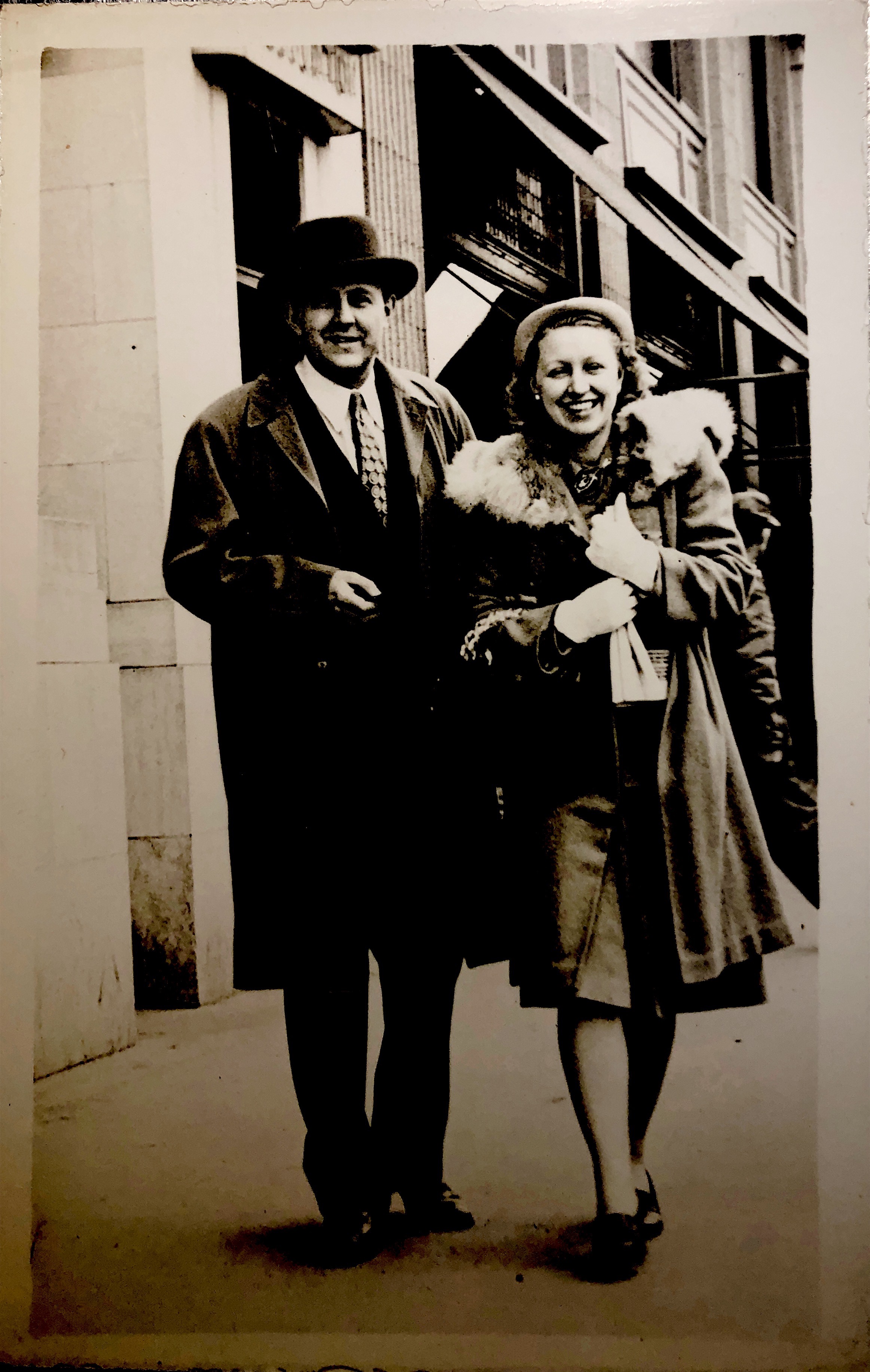
On that day of fast driving in Minnesota, April 19, 1947, there is a picture of my Mom and Dad. It’s one of those pictures taken on the street and made into a postcard by a street photographer. My parents both look wonderful. My mother has a big smile and my father, who had taken my mother’s arm as they walked, is almost grinning at the camera. They are dressed warmly, both wearing suits and overcoats and hats. Their overcoats are opened expressing a relaxed comfortable ambiance. They are caught in mid-stride, my mother’s right foot hardly touches the pavement. My father’s left foot poised on its toe about to leave the ground. They look very young, they look very happy and they look very healthy.I remember seeing this picture when I was much younger. I didn’t know its history until recently. My mother hardly ever talked about my father. When I look at that picture now, I am much older than either of my parent’s were when it was taken. They are in fact the same age as my children. I know now what will happen to my parents in the next few days, in the next few months, in the next few years. My heart breaks for them and I want to step into the picture and help them. I want to comfort them like I would comfort my own children. When I tell this to my husband, my sadness at what is about to happen to them and my need to comfort this young couple, he reminds me that I was there in that picture. I was already comforting them.

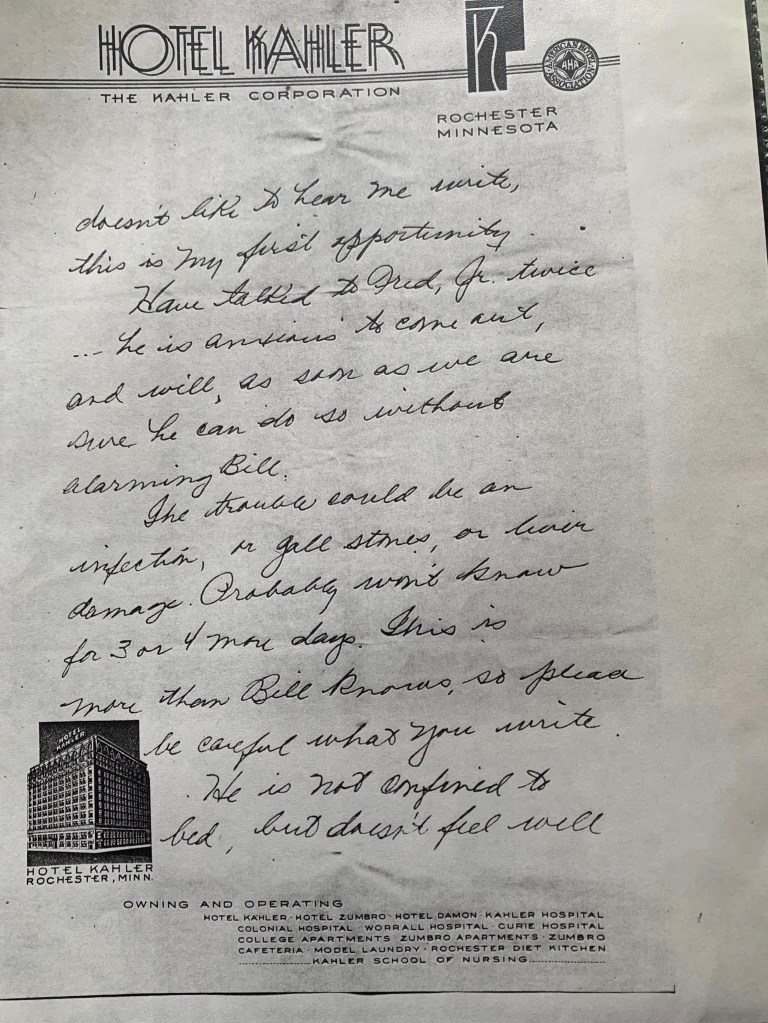


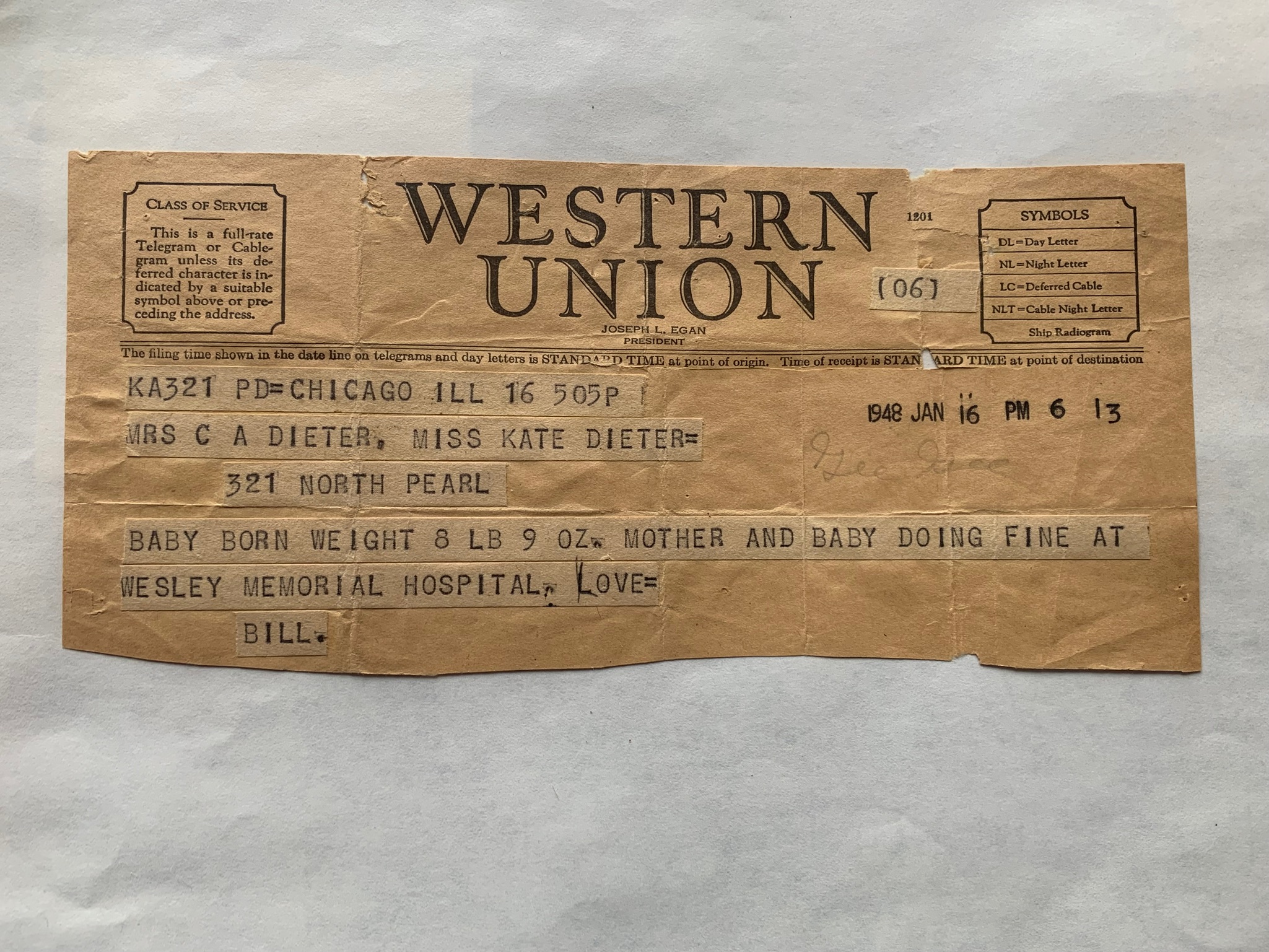
I was born January 15, 1948 in Chicago. The next day at 6 pm, my father sent a telegram to my mother’s grandmother and aunt in Joplin, Missouri. “Baby born weight 8 lbs, 9 ounces Mother and baby doing fine at Wesley Memorial hospital love, Bill.” He specifically doesn’t say that I was a girl, their third daughter. My mother’s parents surely already knew. A few days later, my mother wrote to her parent’s on pink stationery:
“January 19th
Dear Mother and Dad, Your new little granddaughter whose name is either Getschen (sic) Gretrude (or vice versa, is a dusky beauty—-big brown eyes, long dark brown hair—well filled out. Always finishes her meals, and is a perfect speciman (sic)
I am feeling wonderful, like my doctor and the hospital is just like a good hotel. Plan to stay awhile. Received a beautiful new suit, blouse, slip. Gloves and hose this mornng from my husband! Certainly was wonderful of you to call.
With love, Mike”
Just about two weeks after my birth, a big party was given in my honor at the Illinois Athletic Club. My godparents Bob and Loretta (Rita) Cuskley flew in from New York for the occasion. As a little girl, I was always so proud of my godparents. They were so attractive and always so well dressed.
Just a few years ago, I learned that Bob and Rita had spend the summer before my birth with my parents. They had rented neighboring cabins on the shores of Long Island Sound at Sag Harbor. A few years before that—before my parents had children—they were neighbors on Burns Street in Forest Hills, New York. This was during the war and my parents had wonderful parties during the war. A friend of theirs once told me that in that time, you had to celebrate every chance you got because no one knew what was going to happen next. Bob and Rita’s son told me that he remembered, as a young boy, one party when a piano was carried down the block from his parents’ house to my parents’ house where the party was and a piano player was expected.

There is a wonderful picture of Dad from that summer in Sag Harbor. He is standing by the shore in a bathing suit. He had a big barrel hairy chest and broad shoulders. I loved looking at this picture as a child but I had no idea when it was taken. The Cuskleys had three children, two boys and one girl, Ann. There is another picture of Ann with braids and my father standing on the edge of the woods that led to the beach. Ann looks very cute and my father very strong. Like my memory of my father, my only memory of Ann is one of absence. She had polio some time after this picture was taken in 1947. I don’t think I ever met her. My father himself had had polio as a child so it always seems odd to me to look at this picture of my dad whom I never really knew, all healthy and strong and Ann, whom I only imagined as crippled with polio, also healthy. Its interesting they they are standing together in this photo with their shared history of polio, a history that was not evident at the time the photo was taken.

In that summer in Sag Harbor, my father would take a small boat out into the sound and catch fish. He would come back to the beach and fry the fish right there in a fire he made himself. Probably started with wood from the forest behind the picture of him and Ann. In 2002, the Cuskleys’ son told me this story. He was ten years old at the time and was always very impressed with my father and his energy.
My father was a strong swimmer. My father’s right leg was left crippled from his boyhood polio and all sports that included walking and running were impossible for him. He became an excellent swimmer. I’ve heard many stories about his swimming feats, but, that summer, the summer after his operation, swimming was not possible.
His operations at the Mayo Clinic the previous spring had included a colostomy and removal of the rectum. On April 28, 1947 my mother sent a telegram to her parents “Operation Highly Successful no danger of reoccurrence. Bill comfortable.”
When my parent’s returned to Chicago, they didn’t return to their apartment on Palmer Square. Rather, they took an air-conditioned suite at the Palmer House in downtown Chicago. My father’s nurse from the Mayo Clinic accompanied them on the long “rather hectic trip” home on the train. She stayed on for four days. From my mother’s letters it sounds like it was not an easy transition for my father. Certainly, he was not ready to go back to an apartment with three children under the age of three. In the midst of it all, my father came down with an abscess tooth which had to be extracted. A doctor friend of theirs, Herb MacNeal, came to spend some time with Bill. Herb had been a family friend for a while. In late March 1944, when baby Charlotte joined the family, my mother wrote her parents:
“We have two sets of pictures of her, some black and while some color…by Major MacNeal, who had quite a group of CasaBlanca(sic) pictures in the National Geographic. He appointed himself official baby photographer, and comes out with a car load of spotlights, etc. He is a doctor….unfortunately will be shipped out soon, but since he is stationed on a transport, I hope he will be back at frequent intervals.”
Herbert P. MacNeal was the photographer for an article which appeared in National Geographic magazine in July 1943. The article was entitled “Americans on the Barbary Coast”. The article was written by Willard Price. The piece included a photo insert by MacNeal entitled “Casablanca Smiles”. In June 1947, my mother wrote her parents again about MacNeal:
“Herb has been a great help to Bill, getting him on a good diet, giving him iron, locating this infection from the tooth, and generally giving him sound advice. Don’t know what we would have done without him, as only a personal friend would spend so much time and diagnose so carefully. If it hadn’t been for Herb, Bill probably wouldn’t have gone to a dentist for a year. Will try to do better on the next letter I start, love, Maxine.”
My mother had started this letter on Tuesday. Cut it off suddenly and picked it up and finished it again on Saturday. “Have been busy as a bee…doing very little.” I doubt the latter part of that statement. With a sick husband and three small children, I find it amazing she found time to write to her parents at all. In this letter, my mother found time to write on the margins near her first mention of MacNeil, “he’s the one who took all the pictures of Charlotte when she was little.” I find it amazing that my mother found the moment and the energy to relate this piece of history, to add it on to the context of the letter she was writing. It seems like she was not only making it clear to her parents who MacNeal was but also making it clear to me, the child she was carrying. She was leaving a note to me, to the future. She was linking up the quickly scattering pieces of her life. Perhaps, sitting down and writing these letters to her parents was the only time she found to access and to ponder.
As the stages of her husband’s illness ebbed and waned, she no doubt felt that she was losing hold of the world she and Bill once shared.
Please note that my mother at this time is pregnant with her third child in three years. She must have been exhausted and worried, but there is no mention of this in her frequent letters home. I do remember my mother telling me years later that she could not write letters in my father’s sick room. At first she would try to write while he was sleeping. But the noise of her pen bothered him. He was not an easy patient. I wish I could remember the context in which she told me this story: a story about her writing, a story about their life together. Mostly, I remember not knowing enough or hardly anything at all about these topics. When my parents first returned to Chicago, Louise (Huff), a friend of my parents stayed at the apartment with the children. I imagine Emily was there too, getting closer to the children every day. My parents must have been very hopeful that summer after they were settled down in their rented cabin on Long Island Sound. On July 3, my mother wrote to her parents,
“Arrived safely and will have an ideal set up here. Big fenced in backyard with plenty of room to keep the noise away from us. Bill looks better already getting tan and getting his appetite back! He is enjoying the girls and Freddie…all well and getting browner by the minute. Taking Freddie to the doctor for shots right now, Love, Mike.”
I imagine my mother spending a lot of time indoors that summer. Maybe that’s because there are no pictures of her on the beach with the others. She must have been exhausted from the tensions of the previous spring. She wrote her parents before leaving Chicago, “Louise Huff who lived close to us in Jamaica is going to take care of the girls this summer. Emily will take care of Freddie and clean, wash dishes, etc. and I will cook and take care of Bill.” So it was a full household. I imagine my mother talking with Rita Cuskley in the kitchen while she cooked. She would have told Rita that she was pregnant again. To think only three years earlier, as they made plans to adopt Charlotte, my parents worried about never being able to conceive. Together, I imagined my mother and my godmother talked as women have for generations about the meaning of a new pregnancy, the hopes and worries. It was during this shared summer of my mother’s last pregnancy that Rita and Bob were chosen as my godparents.
During that summer my parents made plans to return to Chicago in their own car. They would take an extended car trip together. The quietness and aloneness such a trip would offer them was very different from their busy summer. Just the two of them, and of course I was with them too. My mother was 7 months pregnant by the time they started their journey. But I didn’t learn about this trip until much later. . .when I read the postcards my mother had sent to her parents along the way.
They traveled a circuitous way driving 1800 miles over what was in reality a much shorter distance. They stopped at the Arrowhead Lodge in the Ozarks and at Starved Rock State Park just west of Chicago. They weren’t in a hurry. It must have been the only time they had been alone together in quite a while.
Of course they weren’t completely alone. I was with them. I was 56 years old when I first found out about this trip. I spent hours trying to recreate the hours I had alone with my parents. Imagining and writing and this is what emerged:
My mother stands with my father in the garden waiting for me. They are both much younger than I am now. I’m still getting my things together, watering the flowering pots, pulling a final weed. Settling down to write is always like this for me, a slow process with detours and evasions. My last minute hesitations are only efforts to ready myself for the beginning of our long journey together.
Writing my way through this trip won’t be easy. Standing next to their Oldsmobile station wagon, my parents’ bags are all packed. They are not interested in rushing me; rather they are indulging me as if I were still a young child. They know every step of the way and I am feeling my way through each uncertainty. The memory I’m working from, although deeply buried in my prenatal past, is extremely tenacious and persistent. It buoys me at the same time that it eludes me. Yet, the contentment I feel at its revelations pushes me to continue.
******
Bill and Sylvia wait by their brand new 1947 Oldsmobile because my mother is momentarily out of breath. In the middle of her seventh month of pregnancy, the child she is carrying sometimes takes her breath away. That child is me. Working today from resurfaced postcards and newly assembled medical records, and counting backwards through time, I find myself included in this trip on which they are embarking. It is all somehow very familiar. My father waits with my mother patiently now as she catches her breath. His recent surgery and slow continuing recovery have taught him a certain tolerance with his young wife which he didn’t show in her earlier pregnancies.
It is the beginning of fall and their older children have already left the rented summer cabin on Long Island Sound. Charlotte, Katie, and Freddie are traveling with Emily who has been living with the family since last spring, right before my father’s surgery. Their trip home will be much shorter than ours.
Our journey was carefully laid out over the long summer months of my father’s convalescence in Sag Harbor. That summer, there were many visitors to their cabin by the sound. Family and friends brought with them maps and brochures which my parents savored as they routed their automobile trip back home to Chicago. This trip, their immediate future, was the one thing they could plan with assurance. Although my parents remained hopeful, the months and years ahead were not so certain.
My mother’s doctor advised against the trip. And, of course, her parents worried. She was their only daughter. It was late in her pregnancy and their route was drawn out longer than it need have been. Surely, she was exhausted by the recent months of constant caring for her recuperating husband. My mother, however, promised that they would travel slowly and rest often. In her third pregnancy, she was confident of her own strength. So my parents began in New York, taking me with them.
What I do recall, when I think long and deep about this trip through miles are motel rooms with large beds and also big radios vibrating the otherwise quiet air with music and stories. As promised, my parents took plenty of naps together, slowing our homeward progress but keeping the three of us comfortably close.
Tucked between them, I can still feel the sounds of my parents’ conversation slowing down to a whisper and then silence. Silence at least until my father began to snore. His snoring tempered by the music of the radio in the background is reassuring and never bothersome. It reminds both me and my mother that he is still there lying beside us. He pulls closer to my mother as they nap.
My mother’s body is getting larger every day. Although my father’s hands and arms grow stronger on this journey, his large frame still remains much thinner than usual. There must have been jokes about my mother’s growing belly. My father joked about everything, I’m told. Trying as hard as possible to find hope in their future, they would have been delighted at the prospect of this new child. Perhaps, this baby would be their second son. They had already produced a second daughter and another boy would even things out. But the Fates, those three Greek women who spin and weave and cut the threads of each life’s tapestry, didn’t assemble a pattern of evenness for my parents’ children. Rather, they envisioned in their own image three daughters and only one son.
In future years, this disproportion allowed us children to sort out in our own fashion how we would bond and divide among ourselves. Aware somehow of my parent’s playful hopefulness and the three silent ancient weavers who will outlive us all, I always watch these maneuverings at what feels to me a distance.
******
The luxury of privacy, which an extended car trip affords, easily surfaces in my memory. This is the longest time I would ever have alone with both my parents. Its memory, perched only weeks before my birth, is undeniable.
After some days on the road, my parents and I are waiting out the sudden rain and holing up in a motel room for some extra days alone. So far the weather has been pristine. This particular late autumn seems to hold only crisp clear hints of the coming snow. The rain comes as a surprise.
Taking advantage of this unanticipated change, my parents decide not to drive through the torrents but to wait for clearer traveling conditions. My mother is reading aloud from Howard Fast’s Citizen Tom Paine. Years of studying speech have shaped her always acute sense of her own presence into a fascinating reader’s voice, and my father loves hearing her read aloud. To her, reading is an easy art, and its subtle intonations allow her usually acquiescent voice a welcome chance for creativity.
Listening against the continuous backdrop of the falling rain, my father relaxes in the rhythms of his wife’s voice. My mother’s close by reading summons images of his eccentric and dramatic Aunt Helen who, like my mother, had trained for the theater. When he was a little boy and recovering from polio, his father’s sister would often read to him. In her voice, books he rarely looked at on his own became exotic. Her playful readings always renewed his interest in his neglected books. Usually, he much preferred the company of others.
My father was never much of a student and, perhaps, that is why he was so proud of my mother. So obviously a student and so gifted with words. It was one of the things he loved about her, her education. And it was one of the things she loved about him, his taking her and her education seriously.
My mother had picked up the copy of Citizen Tom Paine that had been lying by my father’s bedside for the past four years and packed it for their long car journey in the fall of 1947. She had bought it for him the April just after they were married. The book received an excellent review in The New York Times. She always read the book reviews in that paper and not much else. When she told her new husband about it, he replied in an effort to impress her, that he might like to read it. She soon surprised him with a copy.
At that time, my newlywed parents were living in my grandfather’s house. It was wartime in 1943 and there were seven adults living under the same roof: my grandfather, his sister (the aforementioned Aunt Helen who had no children of her own), his nephew Jack, the son of his eldest sister, Henry and Katherine the servants who, as my mother wrote in a letter to her parents, actually ran the household, and Bill and Sylvia. My father had brought his young bride to the house where he himself grew up.
In that sturdy, formal, red brick house, there wasn’t room for the rowdy love-making of newlyweds. At bedtime, my mother tried to engage my father in one of her favorite habits, reading before falling asleep. It was something my father wasn’t accustomed to. But the adventures of Tom Paine, resourceful and rebellious like my father caught his imagination, for awhile. My parents didn’t stay long in my grandfather’s crowded house. The following November, despite the shortages of wartime New York, my father managed to rent a more private house not too far away. Presumably from that time on, Citizen Tom Paine rested unopened on their night table.
Now, four years later in the stone and timbered lodge of a Midwestern resort, my mother was again reading Citizen Tom Paine to her husband. This time I was also listening. Three absent very real children rounded out their family now whereas as newlyweds they were only figured in their parents’ dreams. Now, my parents’ dreams are quite different. My father’s illness makes everything uncertain. Citizen Tom Paine, however, remains the same and my mother’s reading continues sturdy and clever as always. Wrapped in my mother’s cadences, Tom Paine’s spirit, with all of his passion and fury, surrounds and transports us all.
In that cozy room with the knotty wood paneling and the clean smell of rain drifting in the barely opened windows, the three of us wait for the weather to change. All of us wish it wouldn’t, wish that we could stay there forever, listing to the rain and the story of Citizen Paine.
Snuggled safely in the moment, my sudden and powerful movements cut short my mother’s reading. She pauses a moment to comment on my vigor. My father—broken from his reveries of Tom Paine, Aunt Helen, and his three absent children—feels keenly, perhaps for the first time, the extent of his diminished strength which lies so near my intruding and evolving energy.
Wanting only to encourage each other, neither of my parents mentions the juxtaposition of my father’s weakened health with my spirited activity. Instead, my father makes a joke about the three rambunctious characters they didn’t take with them on this trip. Instead, my father says that it was wise of them to take only a character whose rumpuses were silent and under control.
The rain keeps falling, my mother continues to read and, for the rest of my life, I will feel most comfortable and secure when my revolutionary thoughts and endeavors are quiet ones.
******
My mother is walking through the fallen leaves, listening to them crackle as they blow across the ground and crumple under her feet. Nestled inside of her, I am listening too, but not to the far away sound of the leaves, rather to the rhythm of her thoughts.
This is the last morning of our trip and my father is just beginning to pack up the car. We spent the last night of our journey here at the lodge of Starved Rock State Park, just west of Chicago. We had traveled south and west from New York so that we could come north through the Missouri towns of Joplin and Kansas City, where my mother grew up and where her grandmother, aunt and brother still lived. Along the way we stayed at every secluded forest lodge we could find and we found several.
There is a certain sadness in the air this morning mirrored by the coming winter and the ending of our journey. In her eighth month of pregnancy, my mother is reminded by her heavy body that there is also much to look forward to. She decides to take a walk around the grounds and readjust her vision. She doesn’t follow the steep trails leading through the sandstone bluffs to the Illinois River. She sticks to the level ground that circles the lodge. She wants to stay close to her husband.
In the distance she watches my father as he works. It will be a short ride into Chicago, and she plans to mail the picture postcard she has just written to her parents from there. “Will be close to 1800 miles by the time we reach home” she reminds herself as she goes over the wording of her postcard. After all the discouragement she and my Dad received about the hardships of this journey, its achievement is something she is proud of.
Next week will be Thanksgiving, and Bill’s father will be in town. Shortly, after that is Bill’s 41st birthday and the next day their fifth wedding anniversary. Last night, huddled together in front of the big stone fireplace, they have decided to celebrate that event in private at a Chicago hotel where they have never stayed before. They know for sure that they want to hold on to the satisfying seclusion that this trip has allowed them. Soon after that comes Christmas, then New Year’s which will be filled with more company.
Images of her sorely missed children run through my mother’s thoughts. Emily, who only last spring was hired as a nursemaid for the children, has been a godsend to the family. My mother can see them all together clearly this picture book morning. Emily has taken the children to the square just across the street from their apartment. Right now, my mother imagines that they are playing, as she is, in the crispy leaves. She kicks up her foot in unison with the children’s imagined kicks. Together, they watch the leaves cascading to the ground. She knows that Emily has been the one constant in her children’s lives in the previous months. The children haven’t seen their parents in weeks and coupled with their long absence last spring, my mother wonders what kind of memories they hold in their tiny heads of their absent parents.
It was quite sudden last April when she and Bill first left the children in Chicago. Easter Sunday was April 6th and my mother had chosen that day to celebrate Katie’s second birthday. Katie, whose real birthday is April 1st, had actually been born on Easter Sunday and my mother wanted to keep the jubilation of that day associated with her daughter’s birth. She had even made matching dresses for the girls to wear and there were two large stuffed bunnies that took part in all the indoor festivities.
The bunnies didn’t accompany them that day, however, as family and friends piled into the brand new Oldsmobile station wagon for the short drive to an outdoor amusement park.16-mm movies show the girls and Freddie riding on a kiddie train and my parents flirting with each other like teenagers. I was not yet in the picture.
Just a week later, my mother was writing to her parents from New York City and explaining why she was there and not visiting them in California. My parents “were on a strenuous round of seeing a doctor a day…Charlotte was with them.” Charlotte was the oldest of the children. She was the easiest child to travel with, no bottles, no diapers. Her first year of life was spent in New York and she could easily be left with familiar friends there while her parents achieved their mission. The letter was light and didn’t give much information. My mother chose instead to write in detail about the dress pattern she was considering for the girls and new dresses she had purchased for herself that were wrinkle free and just right for traveling.
By the end of the week my parents would be back in Chicago and on their way to the Mayo Clinic in Minnesota. In Rochester, after several days of tests, my father was admitted to the hospital on April 24th. It was in this time frame just before he entered the hospital that I was conceived. I like to think that I grew out of the comfort my parents gave each other in this hectic and uncertain time.
Hospital records and my mother’s letters to her parents show that my father had a series of operations. On April 28th after a single barrel colostomy my mother sent a telegram to her parents “Operation highly successful. No Danger of recurrence”. His last operation for the removal of his rectum and sigmoid and a large, invasive tumor was on May 14. The next day was Ascension Day, just 40 days after Easter.
After a six-weeks recovery in Minnesota, my parents returned to Chicago—but not to their home. They stayed at the Palmer House, an old and stately downtown hotel. There, Bill could rest quietly away from the bustle of small children. And the children’s lives could continue, as if normally, with Emily, away from their visibly ill father.
There they stayed until the whole family left Chicago for the rented summer home on Long Island Sound. From New York, my mother wrote to her parents that there is a “big fenced in backyard with plenty of room to keep the noise away from us”. The family was together again, but some separateness was still needed.
How would the children respond to her now my mother wondered as her steps rustled the noisy leaves? Just last week, as Chicago drew nearer, she and Bill had discussed their plans for the coming winter. At first my father suggested that my mother go to California to visit her parents. She had put off that promised trip several times over the past two years, for reasons that had nothing to do with her husband’s recent illness. She clearly much preferred her life in Chicago as a wife and mother to the role of a dutiful daughter that her parents always insisted upon. Now, after so much time, her delays seemed painfully obvious. Now, her pregnancy made such a trip impossible and, anyway, she didn’t want to leave her children again. So she encouraged my dad to travel, visit friends, do some business. He was better now and a trip alone would restore his confidence. It would be the first time they would be apart since his operation. As she watched him from across the lodge’s grounds, she wondered how they would fare without each other.
As my mother dragged her feet through the leaves making a ribbon of unbroken rustling around her thoughts, I too felt my dad at a distance. Sensing then my mother’s troubles, and feeling them so close to my own well being, it’s no surprise today that the sound of crackling leaves beneath my feet still makes me uneasy.
******
Recently, I found an old photograph of my parents’ 1947 station wagon. Its wooden sides and boxy frame make it quite a classic. Even though I can’t remember ever seeing this car, its contours are very homey and familiar. On the back of the picture “September, 1948” is written in my grandfather’s hand along with the address of the first house I can remember living in and the name of my uncle in Kansas City, “Ralph”.
In the picture, my mother and all of us kids are leaning against the Oldsmobile, almost as if the car is holding us up and in a way connecting us. This picture might have been taken on my mom’s thirty-first birthday just 4 days after my father died. It was taken by my grandparents who had come from California and were with us now in New York. Copies of this picture were sent around to other members of my mother’s family.

My mom is wearing a black coat and hat. The difficult smile on her face attests to her sadness. She is holding me in her arms and I am reaching away from her out to Emily who is standing just outside the frame. Since my birth and my father’s accelerating illness, I had spent more time in Emily’s arms than in my mother’s. Katie and Freddie are standing at some distance from my mother on opposite sides. Katie is holding in her three-year-old hand a straw hat with a flowing ribbon. Her Easter birthday hat is a bit out of place in this early fall weather but she holds tightly nevertheless to this memory of a happier time. It is only my oldest sister Charlotte who stands solidly next to my mother.
During the last three months of my father’s illness, we children were divided up among family and friends. Charlotte accompanied my parents to New York, where my father knew he was going to die. He wanted to be near his father, his brothers and his cousins. Chicago was a place of happiness and success for him. New York, though, where he had grown up, was always his home. Katie, Freddie and I stayed in Chicago. Emily and family friends continued to look after us. Eventually, my grandmother arrived from California. In the very last weeks of August, Katie and my grandmother went to Missouri. Katie most surely noticed that she was left behind by her father, mother and older sister, and she needed some extra attention. There they visited relatives in Kansas City and Joplin. In Joplin, they received the news that my father had died. They flew together to New York to meet up with my mother and the other children.
Where I was at the time is harder to discern. No one ever talked about it and there are no written records. There is however a ten second very fuzzy 16-mm clip of me in a baby carriage, sitting up straight. Freddy standing very close by, is stepping even closer to the carriage and holding on tightly. Above us, adults move in and out of the frame packing up the Oldsmobile station wagon whose wooded door is easily recognizable. These, perhaps, were our final moments in Chicago before moving to New York. Someone, thinking of my absent parents, picked up the family camera and focused in tightly on my brother and me, huddled so sweetly together. Soon after this, Emily went with us to New York to be with my mother.
This photo of family togetherness is really a picture of a family coming together again not only after the loss of their father but after being apart. It was not easy for the children to warm up to a mother whom they’d seen so little of in the past months. It was not easy for my mother to smile broadly with the sadness of my father’s death so immediate.
Those of us who could stand are leaning on the car for stability in this captured moment of a family trying to hold itself together. I’m only eight months old and can’t stand firmly yet. It is my mother who connects me to the car she is leaning against. Just as it was my mother who connected me to the “1800” mile car trip just months before I was born.
******
Snow is on the ground now. The flower pots are all stacked and put away for next spring’s planting. My young parents are no longer standing in the garden waiting for me to begin. Rather, my writing coupled with their patience and our joint optimism unites us in our own triad of cutting, spinning and weaving. They have taken their long awaited place in the landscape of my life. Alongside rustling leaves, sudden autumn rains, articulate rebels and my far away siblings, I take note of their distance and their presence.
You can see from the above that this autobiography is composed of three interconnected parts. The first, my own memories which are slight and not to be trusted; second, the research—lengthy and circuitous—which I have done into the lives of all those who contribute to my story; and three, my own intuition which mixes the facts of the past into the unstoppable world of my imagination, playing the facts over until, as Kafka says, they roll at my feet.
Now I am back to writing my autobiography. Picking up the story after my father died. I remember living in Kew Gardens with my mother and my siblings. I remember helping my mother look for the heads of brother and sisters after they left for school in the morning. My mother would tease my older siblings reminding them to be alert in school not to leave their heads at home. Although I had no idea what it all meant, I remember enjoying immensely looking with my mother behind the sofa and in back of the living room chairs for their probably left behind heads.

I remember jumping into bed with my mother and my siblings in the early mornings and all of us combing her hair. She had long straight thick hair and we would all take and comb a piece. This was fun and cozy. It held us close together. I am sure it was very comforting to us all to sit so close together around my mother. I am sure we tugged and pulled in sometimes painful ways to my mother, but I don’t remember her complaining. It must have been nice for her to have us near. I remember my mother at her typewriter in those days in Kew Gardens. I remember coming up to her one time when she was typing. I had been playing a game of doctor with my older siblings. They told me I had a disease that would make my arms and legs fall off. I was very young, I was terrified. She of course comforted me. I knew that she was writing letters to her parents. There was always lots of talk about my grandparents. When they were coming here next. When we were going there next. My grandparents were very much a part of our lives when we were young. I don’t think my mother had planned it that way.
I also remember all of us together raking leaves in the fall and piling them up in the street to burn. The smell of burning leaves was always such a wonderful fall sensation. One year, I must have been about 3 or 4, I was watching the fire and saw a beautiful red wire in the fire. It looked so gorgeous glowing in the waning flames. What was it I wondered. I had never seen a red wire so bright before. I reached in to grab it and burned my fingers.
In the summer of 1949 we all went to California to visit with them.

1951 was a year of getting settled in Kew Gardens, Katie had a serious accident and my dad’s estate was settled in March.
At Christmas of 1951, Max and Hattie came to New York and spent some time with us.What I didn’t know until much later was that, in April, 1952 when I was four or before then, my mother was sending articles out for publication to various magazines. One published in Modern Romances magazine. The article entitled “ Sew and Save: A Beauty of a wardrobe at budget prices” by Katherine Frederick appeared in the Modern Family section of that magazine alongside articles including “Four Basic Steps to Skin Beauty,” “What to tell her: how to explain sex to your child,” and “the Beauty foods: the part foods play to keep you lovely.” There was a whole other section of the magazine called “ Short Stories” which had much racier titles like “ Devastated,” “Cherished,” “Tell me no lies,” “the wrong side of marriage,” and “Off-beat Love”. I remember going with my mother to a photographer’s office and having my picture taken with my mother. She was sitting at a sewing machine in back of me and I was playing with a bunch of balloons. We were wearing matching dresses that she had made. I remember my mother making lots of our clothes. I remember the photographer that day encouraging me to “touch the balloons to the floor and then reach them up to the sky.” I enjoyed it immensely. From this vantage point, I am sure I enjoyed it so much because seldom in fact, probably never, had a man paid that much sustained attention to me.
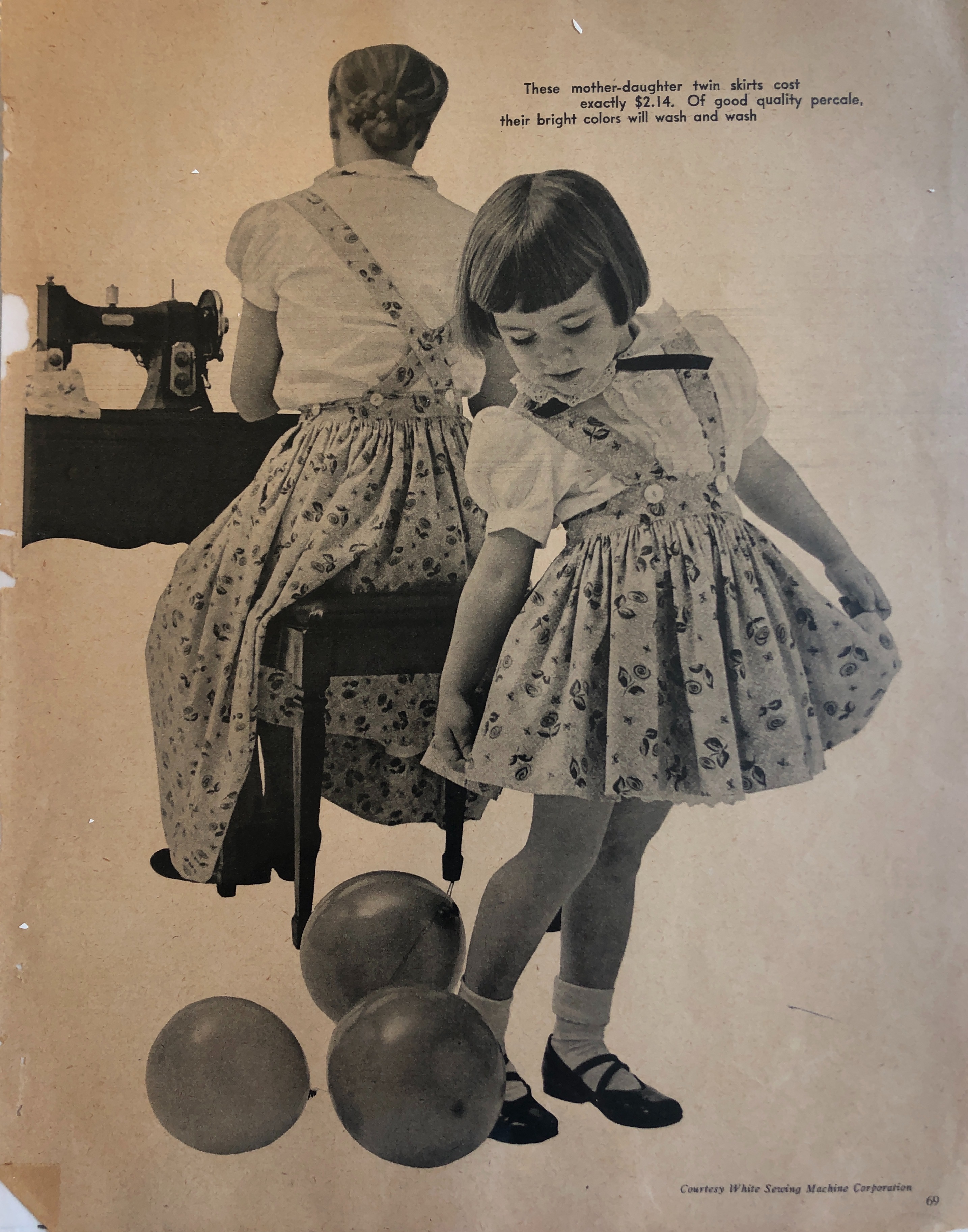
Katherine Frederick was my mother’s pen name. It was also the name of a small musical business rental company that my mother ran out of my father’s family business. My father’s family had been involved since 1883 in the manufacturing of musical instruments. My father was president of the firm until he died, then his older brother, who had been away in the war when my father took over, regained his position as head of the company. My father really loved the music business and there are lots of stories of just how much he enjoyed it.
The name, Katherine Frederick, was taken from the names of my mother’s two middle children. I remember as a young child going with my mother sometimes to the office in Brooklyn. “Gretsch Building # 4” was a large factory building on Broadway just past and opposite the long ramp that leads onto the Williamsburg Bridge. There was another Gretsch Building on the other side of the roadway. As a kid, I remember loving to drive over the Williamsburg Bridge and seeing my name “Gretsch” on one side of the road and then again on the other side. “Gretsch Building No. 3, “Gretsch Building No. 4.”

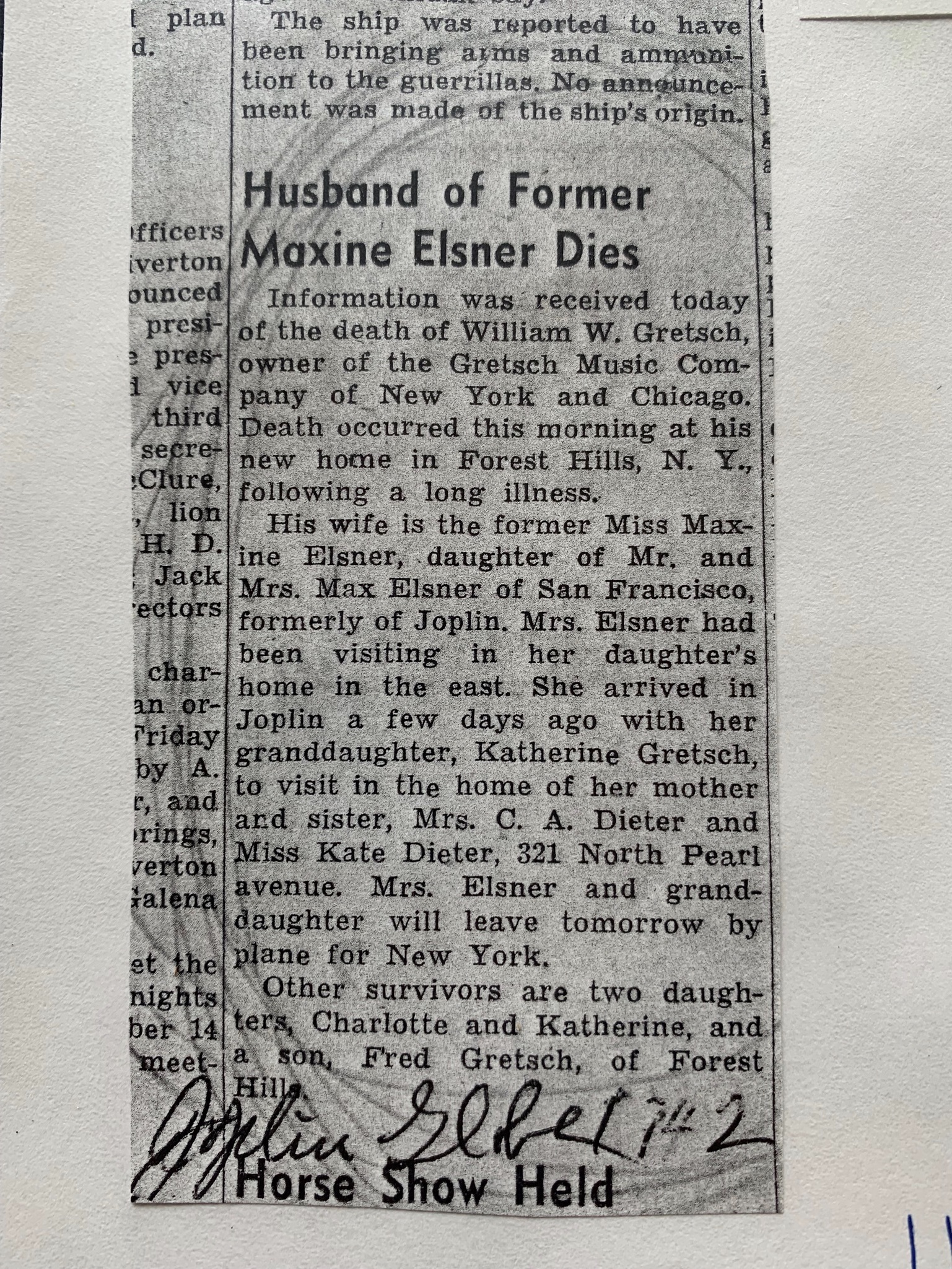
I found out years later from my research into my mother’s life and, in particular from one family friend, that my mother had always wanted to work. This was something out of the ordinary for a woman of that time. When my father was dying, he said to Duke Kramer, “ Be sure that there is always a job for Sylvia to do in the company.” Duke, of course, promised my father. Then when my father died and his brother took over the company, Duke told my father’s wishes to Fred. Duke told me that Fred was outraged. He said “ Sylvia will never have to work, we will always take care of her.”
Perhaps Duke chose a bad moment to say this to Fred, right after his brother’s death, where there was now a widow and four small children to be cared for. It is very clear that at that moment, Fred did not understand that my mother wanted to work..
It had taken a long time for my father to understand my mother’s inclinations towards a career. After college, she took a job in Missouri teaching high school, then a job in Texas working with a radio station which was her love and then a job in San Francisco editing a hotel trade magazine. From the telegrams of this period that my father sent to my mother, there were lots of comments about her jobs in various places.
For long periods of time, there were no telegrams at all, indicating that they were not communicating. References in family letters to fights between my mother and dad, and their making up, further my understanding of their having a stormy relationship before their marriage. After their marriage, when they had come to come kind of an agreement, the situation between them was quite different. Fritzie Kramer, Duke’s wife, told me that she and all the other wives would get so mad at mother because she always went along with everything that her husband wanted. Her obliging behavior make them all look bad. They even organized a meeting to talk to my mother about it. This is certainly a quite different attitude than the stormy relationship of their courtship.
In late October of 1949, my father’s brother Fred and his own father, Fred took a Nassau cruise on a ship named “The New Amsterdam.” Margaret and Morris Van Nostrand from Forest Hills were along on the cruise. I imagine that my grandfather and uncle talked a lot about my mother and us four children. These two bachelors now had the responsibility and jurisdiction of a woman and four young children. They probably discussed my mother’s wanting to work. Although they didn’t understand it, they obviously came around to accept it. My mother had already won over one Gretsch man, her husband, now she was attempting to win over two more.
“The new job is off to a slow start,” my mother wrote the following February to her parents. She went on to describe a manual for dealers she would be putting together and asks her Dad for ideas.
“I am in hopes you will help me out with this one Dad as I think your experience with the insurance deal should be somewhat along these lines. . . The only job I have done so far was an editorial Fred was invited to write for a little publication…..Music….and he liked it very much, and is thinking of having reprints made when it comes out, for hanging in Music Studios. I was delighted that it was such a success. Music comes out four times a year, and so this probably won’t be out formoths (sic), but I’ll let you know when the time comes.”
This new job she is referring to must be the beginning of Katherine Frederick begun then in 1949, just one year after my father’s death. I had no idea of my mother’s push to work until I read her letters. It was very strong and very confident. I wonder where it came from. In this same letter of late February, 1950, my mother refers to Emily.
“The babies are all doing well and Emily is back in the swing of things. She has Saturday afternoon and Sunday off…I have a girl in Sunday morning to babysit while we go to church….and a man once a week for heavy cleaning.”
I wonder what was wrong with Emily, what was it that sent her “out “of the swing of things. I was just barely two years old, my father had been gone for a year and a half. But what was going on with Emily. I know she was in Joplin with us in the summer. There is movie footage of my crying and running off screen on the front porch of the Dieter family home in Joplin. Moments later I return perfectly pacified in Emily’s arms. The family was in Joplin on its way to California that first summer after my father died. Did Emily go all the way to California with us that summer? There are no pictures of her in California that summer, no more mention of her in letters. Only the picture of her in Joplin, holding me on my great grandmother’s front porch. She doesn’t turn up again until that letter of late February, 1950
Just a month later, the end of March, my mother reports that
“we are all in good health except for Emily. She suddenly developed pneumonia again a week ago today, and had to be taken to her daughter’s home in an ambulance. She is improving, but her daughter doesn’t think she will be able to work full time again. This has been coming on for a year, almost, and I’m not surprised, but we all feel very, very sorry for Emily, of course.”
So for the past year, since shortly after my father’s death, Emily has been slowly getting ill. Surely working with four small children must have been very difficult for her. She was at least 50 years old herself as she had an adult daughter. But, my mother writes, for the past year, Emily didn’t leave when she might have. She wanted to stay on, she tried hard to stay on. Most likely she stayed to earn more money. It would have been hard for a woman of her age to find another job, she must have been happy to have this one. I wonder how Emily came to the family. How it was that she started working in Chicago for us when her daughter lived in New York. Did my parents know somehow that they would be moving to New York when they hired her in 1947 before my father was really ill?
Or had my family somehow arranged for both Emily and her daughter to move to New York when it became apparent that the family would be moving? I was just two years old when Emily left the family. I must have been devastated to lose her. She had been my major caregiver all my short life. My brother Freddie too was also very close to her. I wonder if he felt left behind when I was born and a new baby came into the household. After all, it had been Emily’s job to take care of him and after I was born, she was taking care of me also. In that same March letter, the last letter when Emily is mentioned, my mother writes about a new girl, Pauline, who speaks only German.

“ she is a D.P. has been here three weeks and started this morning…that is the only reason I’m able to write now…..Since I want to learn German from her I am in no real hurry for her to learn English. Her home was in Yugoslavia, and she was displaced to Austria nine years ago. Her twin sister came with her and is looking for work. They have an aunt in Glendale…nearby…Of course I won’t work until I have her under control, but did want to let you know all about us. Dad, thanks very much for your letter, It gave me lots of ideas, and I have it filed away for the time when I can get back into production. I’ll send you a copy of the manual when It’s finished., The first draft is about half done now…the hardest part fortunately.”
So my mother was writing soon after my father died. Writing had been her profession. She wrote radio copy in the early 1940s for a radio station in Texas. Later, she got a job as an editor for a trade magazine in San Francisco. So it is no surprise that she picked it up again when she felt she needed to earn money….and she wanted to work.
On April 14,1952, the same year and just a month before my mother’s article was published in Modern Romances, Fulton J. Sheen appeared on the cover of Time magazine. Sheen, “ perhaps, the most famous preacher in the U.S., certainly America’s best known roman Catholic and the newest star of U.S. television,” was the host of a half hour show “ Life is Worth Living” “which began two months ago on three stations and now is carried by seventeen.” (NYT April 2, 1952)
My mother, as with a lot of other people in the country, liked Fulton Sheen very much. It is one of the few television shows I remember her watching. He had a background in radio and this much have really attracted my mother who all her life had been interested in radio. Public speaking was also her forte, so Sheen was really someone she understood. And of course his Catholicism. . .which my mother, having become Catholic to marry my father, was most interested in perfecting in herself.
Perhaps, here is the time to write about my mother’s experiences in radio, about her childhood dreams…as far as I have been able to patch them together. In a questionnaire that she filled out soon after arriving as a junior at Northwestern University in 1937, she wrote
“When ten years old, I started taking lessons in dramatics. From then until now I have studied speech with the idea of making it my career. There is a small radio station in my home town , and through it I became interested in radio broadcasting. I chose Northwestern University because of its superior speech division and its radio courses. When I finish college I plan to do both writing and speaking for radio.“
My mother was ten years old in 1927 when Radio was really the “tops” it was the latest thing. No wonder she wanted to be a part of it. In high school, she won awards for public speaking and debate. She was also in many plays and even held a private speech recital at the home of her teacher. Luckily, the invitation survived, or I would have never known this side of my mother, a beautiful young 15 year-old gathering her neighbors in Joplin, Missouri together, so that she could recite. Imagine the confidence she must have had.
When she left Northwestern, she took a job teaching speech in Webb City, just outside of Joplin. This is the time that I think her parents were having problems. From what I can gather, her father had left her mother the summer after my mother graduated from Northwestern. She took the job in Webb City in late August. Perhaps, she took the job so late because she was not planning on staying in Joplin. But circumstances with her parents might have pressured her to stay at home for a while. If this is what she wanted to do, or what she felt she had to do, is unclear. My father kept in close contact with her as she took her new job and settled into life again in her home town.
The next year 1941, she was working in Wichita Falls, Texas, at a local radio station writing copy. This is what she really wanted to do, it is what she trained to do at Northwestern. But did she want to do it in Wichita Falls, Texas? According to the city directories she was living in Wichita Falls with her grandmother in 1941. And according to family letters, her mother Hattie was also there in the spring of 1941. So there were three generations of women in Wichita Falls. My mother, her mother and her grandmother.
There are no telegrams from the period between May 1940, when her job at Webb City ended, until she was fired from her job in Wichita Falls in December, 1941. My mother knew that she wasn’t going back to that job in Webb City. She no doubt wanted a radio job. A few pictures I have found give evidence that my parents were together in this period. There is a picture of them together in Chicago dated July 12, 1940. They seem very happy; my mother looking young and beautiful, my father adoringly facing her. This is the exact date of my son’s birthday, 34 years later, so the picture especially interests me. The following September the London Blitz started and Robert R. Murrow gave radio even more pertinence through his broadcasts from that besieged city. By early January of 1941, Maxine and Bill were together again at the famous Michael Todd Night Club that had just opened in Chicago. No doubt she had come up form Texas again to spend the holidays in Chicago. Again, in February in Fulton, Missouri, Maxine and Bill and Hattie were visiting, no doubt, Paul and Lola, who were expecting their first child in June.
But then it appears there was a split. My mother was in Wichita Falls, Texas ,and working at a radio station, living with her grandmother and her mother.
Did she go Wichita Falls alone with her mother and grandmother following her? The family home at 410 North Pearl Street was being sold and a new house built just down the street for her grandmother and her Tante Kate. So maybe Texas was a good place for Maxine’s aging grandmother to live while changes were being made. The winter climate would suit her better. Hattie, perhaps, didn’t want to stay in Joplin anymore once it became known that Max had left there. So, perhaps, both women, mother and daughter, grandmother and mother, followed Maxine, my mother to Texas.
Whatever the circumstances it was a family procession of the women in the family to Wichita Falls, Texas and my father definitely was not included. Hattie had been born in Texas. There were lots of Dieter family connections. It would have been a good place for Hattie to “hide out” for a while after Max left. Especially since her daughter was working there. What a lot of pressure all of this must have put on my mother. There must have been incredible pressure on her to help out her mother in this very sad time. Her family needed her to be around. Bill, on the other hand, was really alluring with his independence and his quite obvious (through his many telegrams) affection.
Was my father angry that my mother was pursuing a career and not pursuing him? Was their break-up over Maxine’s remaining so close to her family, especially to her mother. At any rate, they did not communicate by telegram while she was in Texas. Of if they did, those telegrams were not saved.
As soon as my mother was “fired” from her Texas job, she telegraphed my father and then came to Chicago for the New Year’s celebration. Her parents were back together again and living in California. My mother went on to get a job the following fall in California as an editor of a hotel trade magazine. In their November issue Western Hotel and Restaurant Reporter announced
“There is a new personality at the Editor’s desk. Miss Gladys Latham, who has capably filled the position for over a year, leaves now to be married and Maxine Elsner takes her place. Miss Elsner, a graduate of Northwestern University School of Speech, has worked with several advertising agencies in Chicago and has done considerable radio work ‘deep in the heart of Texas.’ When she came to California this year, she associated with an agency in San Francisco, and now steps up to serve the Hotel and Restaurant Industries in the Western states.”
Soon their newest editor would be gone too, also to get married. Maxine was living with her parents in San Francisco at the time. Her parent’s marriage difficulties seemed to be over. She only had her new position for one month when my father surprising asked her to marry him. Perhaps, my mother was feeling that her parent’s no longer needed her with them. She accepted right away. They were married in December of 1942. I remember asking my mom about how my father asked her to marry him. She said something about working in Texas. Maybe she said that they had broken up because she had been working in Texas. I was shocked to hear that there was a Texas connection in my family. I was a real tom boy and anything that had to do with Texas was great by me. I remember my mother told me that she and my father had been arguing (about her job in Texas), so that when he called her on the phone she acted quite aloof. He said to her, you know my birthday is coming? Is it really she said, knowing full well that it was. And you know what I want for my birthday, he said. No, she answered acting as uninterested as she could. Probably that was pretty uninterested given all of her dramatic training. “ You”, he said. And that was it.
A ring was sent to her across the country, she was in California, he in New York, a date was set and plans were made.

So my mother went, in a very short period of time, only months maybe, from being very hard to get to doing exactly what my father wanted her to do. Remember the conference that Fritzie Kramer and Francis _ called my mother to? They wanted to get her to quit doing everything my father said and to stop allowing him to do whatever he wanted. It made them, as wives of his good friends, look bad for not putting up with their husband’s antics.
My mother had been through a lot with her parent’s separation so soon after her graduation from college. Their reunion signaled a new life for her. She could now lead her own life with her wonderful new husband. She moved to the other side of the continent and changed her religion and began again.
Back to the Spring of 1952, when my mother’s article was published in Modern Romance and Fulton Sheen was becoming a big television personality.
My Uncle Fred was engaged to marry Helen Mooney. My mother sent a clipping from the paper to her parents with a picture of Helen and Fred at the Stork Club. “Both look awful happy—is wonderful to be in love.”
My mother must have been busy with her writing. There are not many letters to her parents. That summer we rented a house in Connecticut. Not far from Uncle Dick and his children. . .on a lake.
My grandfather was a constant figure in the lives of us four children. He would come to the house on the week-end and bring us treats or take us out for a ride in his big car. We also often went to his house in Forest Hills which wasn’t far away.
I don’t remember much about the house on Shorthill Road when he was there but I do remember standing outside with him and checking his pockets for candy. It was a game we played. He would put candy in his pockets and we would try to find it and get it out.
He would take us in his big car to Forest Park to go horseback riding. It was a pony rink and we would wait in line for our turn to be lifted up onto the back of these small horses that walked round a circle. I remember once vividly, waiting to get the white horse. When my turn came, I was lifted to a darker house and I cried and cried. My grandfather wanted to know the reason I was crying and when I told him, he insisted that I be taken off that horse and put on the white horse. I have remembered that all my life as the first time, really, a man intervened for me, to give me what I wanted.
I remember too one time riding home in the back seat of his car and being stopped by the police. My grandfather had been speeding. I watched from the back window as he talked to the police and made a deal with them. He didn’t get a ticket. He must have given them some money or perhaps, offered them a guitar. It was talked about a lot afterwards. I didn’t understand what was going on then but years later I figured it out.
In the summer of 1952, my mother rented a house in Candlewood Isle, Connecticut. The house was a short drive to my cousins’ house also in Connecticut. They lived on a lake with a floating dock not too far from shore. What I remember most about that summer is swimming. Near where our rented house was, there was a dock at the lake with ropes, dividing off swimming areas. I remember loving being in the water. I just couldn’t be in the water enough. I remember too that my lips always turned blue when I came out of the water. I loved it when my mother would wrap me in a big towel and hug me until I was dry and warm. I remember my mother standing on the dock and coaxing me out of the water by offering me Campbell’s chicken noodle soup for lunch. That summer too, our little dog was killed. Hit by a car. Katie was so sad. I remember she took a pebble from our driveway and said that she would keep this rock in her pocket forever as a remembrance of our dog. That to me was incredible to keep a rock in your pocket forever.
I also remember Freddie taking me into the woods of the vacant lot across from our rented house, the first day we arrived. We walked around in the lot and I thought we were lost. I probably cried. Freddy told me he found gold dust in an old log that had fallen long ago across the path. He wanted me to help him collect it all up. He assured me we would be rich. I remember I didn’t really want to help him I wanted to go home. He must have thought I was a terrible nuisance.
In the fall of 1952, our lives changed when my grandfather Gretsch died suddenly in his sleep from a heart attack. I remember waiting for him to come and pick us up on a week-end morning but he didn’t come. He was 72 years old.
There are no records of how my mother felt about this loss. My grandfather has been with us only weeks before in Candlewood, Connecticut, and we all felt close to him. On August 22, he wrote to my mother that he had her letter of August 20. My mother was obviously in close contact with my grandfather and called him “Dad”. In this letter, typed by his secretary, my grandfather wrote,
“I called up the German woman. She seemed to be quite an intelligent person and was working for a doctor over in Richmond Hill. She was getting $50.00 a week, but would take $40.00 if she can bring her 12-year old daughter. She has had a position offered to her, but will get in touch with me again if she does not take it.”
It strikes me reading this letter fifty years after it was written how little sensitivity this letter shows for this”German woman.” Here she is in a foreign land with a daughter to take care of and working. My grandfather is offering her a new job with a cut in pay, taking advantage of her situation, taking advantage of her need to be with her daughter. The same insensitivity I notice in my mother’s letters when she talks about the young woman, Pauline, who is a D. P. and doesn’t know how to cook. There is an arrogance here in the family towards hired help. Maybe it has to do with the proximity of the war. I must say I am not very proud of it. My mother saved this letter and somehow it got passed down to me now. But so many letters were not saved. My mother wrote on the letter after my grandfather’s death, “Dad’s last letter to us-”.
Also the fall of 1952, my brother started first grade and joined my two older sisters in the Catholic school in Forest Hills. The only memory I have of this is looking for their heads with my mother. Counting backwards it would seem that I started kindergarten in this fall too. But I have no memory of going to school in Kew Gardens. This must have been something for my mother…all four of her children in school. Since I had a January birthday, I was in a class with much older children. I was only four, most of the other children were five. Now that I think about it, maybe I didn’t start kindergarten in Kew Gardens. I have no memory of that at all.
But I remember my brother’s first day of school the year before. It was very exciting. I remember my grandparents from California being in Kew Gardens with us. I don’t know if they were there for this first day of school for my brother. I remember, though, taking my brother to school with my grandfather, GrossPop, we called him. We would drop my brother off at school and then we would walk around the neighborhood, just the two of us. This is a very dim memory. Pictures however remind me that my California grandparents were visiting us that Christmas of 1951.
My California grandparents were large figures in my young life. Each year at Christmas and birthdays they would send us large packages full of wonderful presents….dolls, toys, games. On each of our birthdays, we all got loads of presents. I remember this vaguely but reading my mother’s letters really reminds me of all the gifts we each got no matter whose birthday it was. There was never any mention of the disturbance that my grandfather’s behavior had had on the family only a few years earlier. He and my grandmother seemed woven together, we never saw one with out the other. Yet, there was always a bit of discomfort when they were around. There was a tension that was hard to describe and certainly felt by us children. Wonderful presents and regular extended visits couldn’t make up for the underlying unease and distance of our relations. It wasn’t until much later— long after they had all died—that I learned of my mother’s attempt to be independent of her parents when she married my father. Later, I learned of the tensions that had existed between my father and my mother’s parents. I learned of the impact of my father’s death on her decision to be close to her parents again. No doubt she felt that with the loss of their father, her children really needed all the grandparents they could get. No doubt she felt also, the need of parents herself now that her husband was gone.
Also, I remember vividly, my first day of school at P.S.101 in Forest Hills. It was after our move there in March of 1953. I was already five years old. I remember crying profusely when my mother left. I remember someone helping me off with my boots and crying, crying, crying.
So maybe, I didn’t start kindergarten in Kew Garden, maybe my mother waited until we moved and I was five before she sent me.It was a period of chance in my young life, my grandfather dying, moving to Forest Hills and starting kindergarten.
Chapter 2: Four Modes of Writing “Autobiography”
Exploring Gretchen’s writings in search of “chapter two” of her projected “autobiography,” Heather and I identified in October 2023 as many as four different modes through which Gretchen attempted to present what she could represent as“autobiography.” Each seems to represent an experiment in finding a voice that Gretchen felt confident in using.And the sequence reflects shifting thinking in 2006-2007 and her sense of the challenges of understanding and representing her experience, at 16 years of age, the death of her mother, Maxine Sylvia Gretsch February 29, 2964. The first might be taken as a chronological recapitulation from memory. (Version One of Chapter 2 as found on a Maxtor external hard drive on October 14, 2023.) [DWC]
Interpretation One
Middle of December, 2006
The days are getting shorter. I love watching the darkness quietly settling in after the blaze of summer. Its coziness is comforting. At least I find it so. . .if I can stay inside where it is warm and light, and work with the darkness outside at a comfortable distance.
The wood pile decreases slowly and as it slims down its inner order emerges from the pile of tossed away odds and ends.
I had just turned five years old in January, when my mother moved her four children from Kew Gardens to Forest Hills in March, 1953. I remember going to my new kindergarten class at P.S. 101. I remember crying when my mother left me there. I remember taking my boots off and crying. Someone was helping me. I was really sad as my mother left.
I think my mother might have kept me out of school until the January I turned five. I think. . .perhaps I never started school in the Kew Gardens kindergarten. Maybe that is why I was so upset when my mother left me at PS 101. It might have been my first experience away from her. Interesting that my start of school began in the last winter or early spring and not in the fall like most children. And then, of course, it was broken off because soon it was summer vacation.

The new “German woman” housekeeper my grandfather had mentioned in his last letter to my mother didn’t work out. In February, my mother wrote to her parents “My Puerto Rican girl is working out very nicely. Hope she lasts until we move.” So there were lots of housekeepers in my childhood.
My mother’s letters in the early months of 1953 are full of plans for moving to Shorthill Road and how happy she is about the move.
What I remember about the move is my mother getting her hair cut. I remember the television was in the front room of the house on Shorthill Road. I remember watching television one morning and a woman coming to the door. Looking out the window, I didn’t recognize this stranger. It was our mother, who had gotten her hair cut so short that we didn’t know who she was.
Perhaps this happened before we actually did move into the house. Perhaps I was staying at the house on that day with the maid Missy or with my Aunt Helen who was living there then. From my mother’s letters, I see that her haircut occurred before we actually moved in.
Talking to my sister Charlotte, she has her own story—almost fifty five years later—of not recognizing my mother with her new haircut My mother’s haircut signaled to us all a big chance. Here was a woman we didn’t recognize. Charlotte remembers seeing this woman who she did not recognize walking into our house in Kew Gardens. Charlotte had just come home from school. Charlotte was standing outside watching this strange woman walk into our house.
Years later, I thought of what it must have meant to my mother to have her long hair cut short. She was definitely making a transition from one house to another. From a rented house to the family home where her husband had grown up. She had stayed at the house once or twice when she lived was visiting my father.
She came there as a new bride to live for a few months because of the housing shortage during the war. But each of those times, there were Gretsch men in the house in control. Now she was the one in control. There were no Gretsch men living in the house, except her young son who was in first grade.
Perhaps, getting her hair cut was a symbol for her of her new found strength. . .her new found power as being the one in charge of this traditionally male, traditionally Gretsch household.
Also, as I think about it now, so many years later, my mother was probably coming out of a long sad period after my father’s death. Perhaps, that is why her children didn’t recognize her. No only did she have her hair cut but she was also symbolizing a change in her life all together. Although, she certainly wasn’t quiet in the five years following my father’s death. She worked and she traveled. I think, with my grandfather’s death, with Uncle Fred’s new baby and with the moving into the family house, my mother began to really feel a new part of her life emerging.
Perhaps she had felt some refuge in my grandfather’s presence and in the attention of my father’s older brother Fred. Now with my grandfather gone and Fred himself married and a new father, she felt herself letting go of whatever it was she felt she needed from them after her husbands death.
It must have taken some doing, this rebuilding of herself after the tragedy of my father’s death. No doubt, sitting in bed in the morning surrounded by her 4 young children, each combing her hair, was comforting for her. But the cutting of her hair signaled a move away from her needing that sort of comfort. No doubt moving into the sturdy brick house on Shorthill Road also gave her some confidence for her new life.
Whatever was going on, I have a feeling that it wasn’t just the haircut that signaled a change in how we children looked at our mother and what we found there.
After all, she was our only parent and, although we didn’t recognize it at the time, she was our only anchor in the world. We thought about her and counted on her twice as much as children with two parents count on their mother.
There was lots of discussion and laughter over us not recognizing this strange woman who was making her way into our house. We all laughed about it. I don’t remember many things from that period but I remember that. I think there must have been some tension there. Who was this woman we didn’t recognize? Was this another person of the many who had come in and out of our lives when we were small? We must have been quite used to it. I wonder if we ever wondered what happened to the woman with the long hair who we would no longer sit in bed with combing her hair.
Another thing I remember about that house and being very young is the radiators. I remember discovering, that I could take a crayon and if the radiators were hot, I could move the crayon across the surface of this heat source in a soft velvety flowing motion. It was almost like swimming myself, moving the tip of the soft crayon across the even surface of the heater. I found something magical in it. I don’t remember getting in trouble for doing it but I remember keeping it very quiet what I was doing. Something about the smoothness of the wax on the heat reminded me of swimming.
In the spring (1953) after we moved into the new house, my mother started having health problems, probably from exhaustion. It had been a busy year with the move, a trip to Candlewood Isle at Easter, and by May she is sick with pain in her face. This is something that I remember well and it would plague her for a long time. In a week after writing her parents about her difficulties, it was decided that she needed some time away from the children. Her parents were always eager to help. So in early June, even before school was out, we all flew to California. We four children stayed with my grandparents for several weeks while my mother took a cruise to Central America. It must have been something for my grandparents to welcome into their simple quiet life four very young children.
I remember going to the boat and seeing my mother off. I remember the dress I wore. A while sailor dress with a blue tie. I don’t remember being sad.
What really refocused my memories of this summer was years later reading my mother’s letters. According to her letter, her ship left on June 16. She was suppose to come back on the 17th of July. But for some reason, she didn’t return until August 1. From her letters, she seemed to be having a wonderful time. She left the ship at one point and flew off to visit other countries. There is something missing from her letters which is reminiscent of the letters she wrote home when she was dating my father. She seems to be back to her independent self, having a life to herself which she doesn’t share with her parents.
The following Thanksgiving, we all drove up to Connecticut to be with our cousins for Christmas. I remember staying in a small hotel and my mother’s letter reminds me that we saw “Kiss me Kate”.
That Christmas, a package arrived for my mother from a foreign country. We put it under the tree. I remember her opening it on Christmas morning and finding a very plain and elegant silver mirror inside. The engraving read, “ Sylvia, June 1953”, she held the mirror to her heart and looked very pensive for a short while. She never told us who sent it to her. We were probably not much interested, having our own presents to open. The date, however, coincides with the time she spent in Central America this last summer. Perhaps she had met someone. Someone who admired her very much. Perhaps this is why she decided to spend an extra two weeks away.

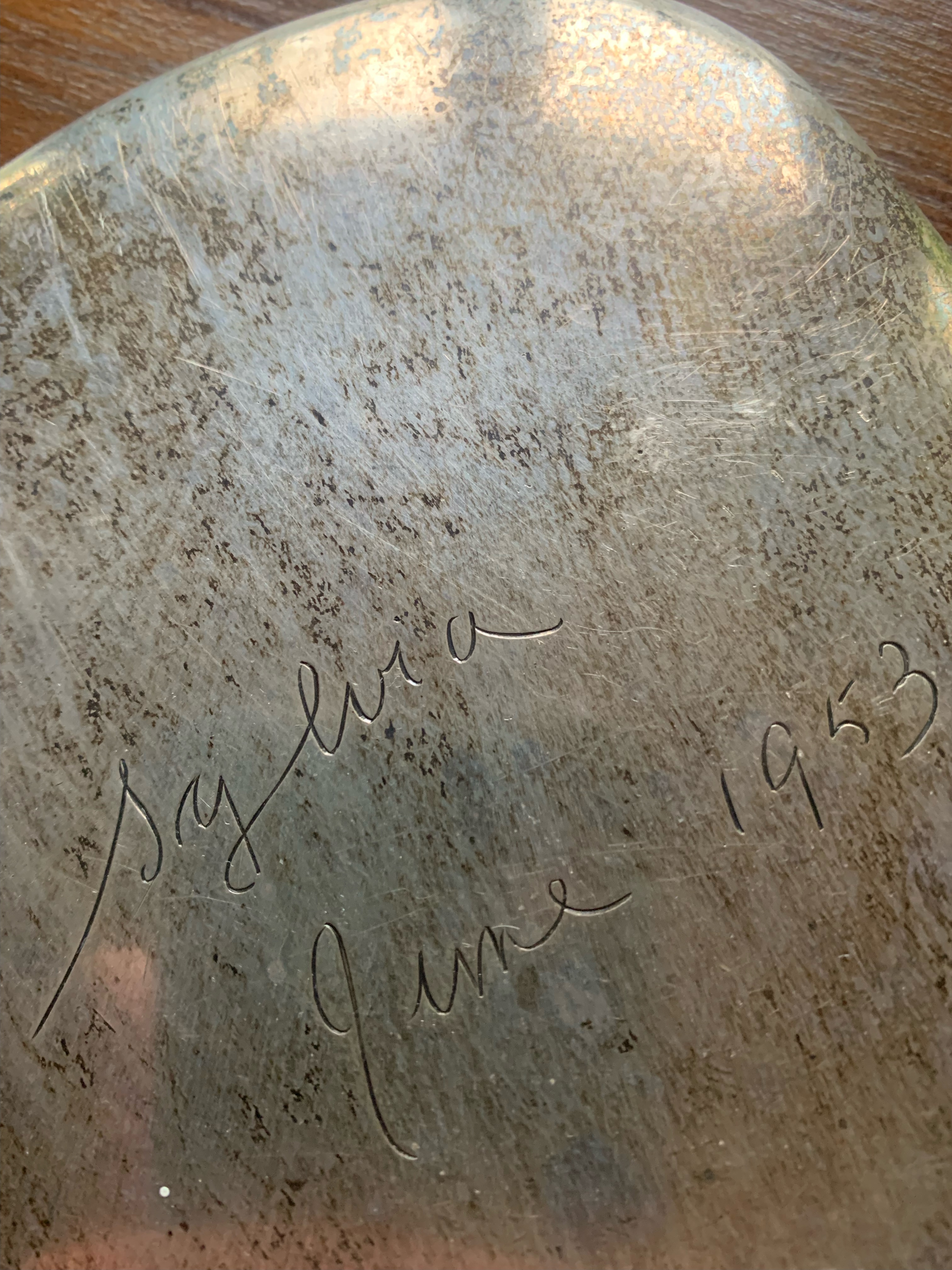
Christmas in Forest Hills was really wonderful. We always got up early Christmas morning and went to Mass. We would get dressed and leave the house very quickly we weren’t allowed to looked at the tree which was in the front room. But we usually were able to sneak a peak on our way out of the house. After church we would come home and have breakfast before we were allowed to look at the tree and opened our presents. Our friends were all allowed to open their presents before church. So we felt very put upon to have to wait so long.

And I remember my mother delaying the whole process further by saying at the breakfast table after we had all finished eating, “Oh, I think I will have another cup of coffee.” Of course, it was infuriating but fun too, we were so excited to open our gifts. There were always piles of presents from our grandparents in California. Also from Santa Claus.
In the afternoon, Uncle Fred, Aunt Helen and Happy would stop by on their way into the city to spend the evening with Helen’s family. They always brought more presents. Usually a beautiful dress for each of us girls. Always something very elegant, something my mother would buy for us.
Probably around 1956 or 7 Mrs. Conors came to work for our family. She would come three days a week, Monday, Wednesday and Friday. She did cleaning and laundry. Sometimes she would do some cooking. She was a great cook. Always on our birthdays, she would bring a tin of her home make cookies for us. They were wonderful cookies. Her meringues were my favorite but there were also chocolate chip and sugar cookies. I remember days before one of us had a birthday we would start bribing our siblings by offering them one of the soon to be arriving delicacies.
Mrs. Conors was German but she spoke perfect English. I remember once when I was doing my homework, asking her how to spell a word. She just laughed . She had no idea how to spell words in English. She wasn’t laughing at me rather at the idea that she might be able to spell in English. I found this really interesting. It was such a subtlety. I have always been a terrible speller. Mrs. Conors was offering a whole new way of looking at spelling. It wasn’t just something that everyone in the world knew how to do but me. There was something more to it…but I couldn’t figure out what it was.
Mrs. Conors’s husband was our gardener for a while. Mostly I remember him sitting in his car at the curb at the end of our driveway waiting to pick up his wife. He seemed much older than she was, although she seemed pretty old too. He shook a lot and moved slowly. He had apparently been married before and had some grown up children from an earlier marriage. I think there was some mention of tension with these older children but I never paid much attention. They never had any children of their own. Once I remember the whole family going to their house for tea. It was a very nice little house with a beautiful garden. Mrs. Conors had made all sort of cookies and donuts. It was great. I think they lived in Jamaica, someplace nearby in Queens.
When we lived in Forest Hills, all of us kids had two birthday parties every year. A children’s party for our friends, and an adult party for the grown ups. We got presents at each party. My mother often had dinner parties. I remember helping her set up the card tables in the living room, maybe two or three of them. Mrs. Conors would cook and serve and the guests would eat at these little table when there were too many to sit at the big dinning room table.
After my mother’s trip to Central America, she began taking trips more often. In the coming years, she went to Atlantic City with a woman friend, and up the Saint Lawrence River with my brother’s godmother to visit the shrine of Sainte-Anne-de-Beaupré. She spent a week in Chicago.
I remember staying once with my brother at Uncle Jack and Aunt Frances’s house. I had no idea how they were related to us. They were old, like grandparents. Their children were all grown. They lived in a row house which was right next door to Uncle Teddy and Aunt Kay. I had no idea of that relationship either. Uncle Teddy and Aunt Kay were a lot younger. They even had a daughter my age and a son Freddie’s age. But they weren’t Catholic, so we didn’t see them much. I did learn that Uncle Teddy was once good friends with my dad.
Since I was told so little about my dad, this was a big piece of information to have. Whenever, I would see Uncle Teddy, I would wonder if my dad maybe looked like him or acted like him. I always loved getting as close to Uncle Teddy as I could. I was so amazed that he had a daughter my age. It was sort of like me and my dad, except that my dad was dead. I remember seeing in her bedroom one time that she had a canopy bed. I was so impressed. I thought that she must have had it because she had a dad.
Another thing I remember about my childhood years is ice skating. My mother would often take us ice skating to a city rink. We had to get in the car and drive but it wasn’t really far. It was a big rink. We would all skate and it was lots of fun. Afterwards, we would stop at Howard Johnson’s for ice cream. Howard Johnson’s was a chain of restaurants then. They weren’t very fancy and they had a place just for getting ice cream. I learned years later that the place we would skate was once the headquarters of the UN when it was just getting started in 1948. The building had been an ice skating rink earlier for the World’s Fair in 1939. My mother had come to NYC to go to that fair and she stayed with my grandfather in the house on Shorthill Road. But I only learned this later. My mother never mentioned this as we skated around the rink.
I also remember ice skating at the West Side Tennis Club where they set up a rink…and also in our backyard where one year we had a make skate rink that we flooded ourselves.
Once my mother thought it would be a great idea if we all took bridge lessons. So she found a woman who would come to the house and teach us how to play bridge. I think I must have been about eleven or twelve. None of us were very interested and the lessons didn’t last long.
After my mother’s trip to Central America, she started thinking more and more about traveling. Finally, all of her ideas morphed into a year long excursion for all of us in Europe. I think she started thinking about this in 1956 and by 1958 we were on our way.
I had a boy friend at the time Robert Gearheart. He, or I think it would be more accurate to say his mother, organized a going away party for me. It was a boy-girl party in the basement of his home on Austin Street. I remember they had a paneled basement. There were posters of European cities on the wall and I remember thinking that the room was decorated especially for me. Robert’s father was a doctor and now I think that the family was probably Jewish. . .although at the time I didn’t think about this at all.
Jews could not live in Forest Hills Gardens at the time and his family lived right on the outskirts of the Gardens but still in Forest Hills.
I had a great time at the party. As I remember it, there was also a big party at the boat when we sailed. I think that Robert came to that too, so his mother must have also come.
I was ten years old and had probably met Robert at Ball Room Dancing class at the Community House. The Community House was definitely in the Gardens. It was a private club for people who lived in the Gardens but anyone could go to some of the classes that they offered. Dancing classes were once a week and everyone had to wear white gloves and dress up. The boys had to wear jackets and ties and the girls fancy dresses. All my siblings took the classes. So I am sure I was delighted when my turn came.
We sailed on a freighter from New York. It was a lot of fun but I was pretty seasick at first. We were the only passengers. Maybe there was another couple. I had a friend on the ship. Someone’s daughter, maybe the Captain’s. I remember going all over the ship with her. One time I remember crawling under a door to go into a storage room. We really got into trouble because the Captain was able to see us the whole time from the bridge.
There was a swimming pool on the ship that the crew had jerry rigged on the desk. It wasn’t very big but it worked very well and was a fun place to play.
We arrived in the Azores and went on the Portugal and then down to Cadiz, Spain, where we disembarked. We had our car with us. A Ford or a Dodge. A big American car. I remember seeing it being taken our of the hole of the ship on a big crane and everyone was looking at it. It was only 1958, not long after the war. Franco was still in charge in Spain.
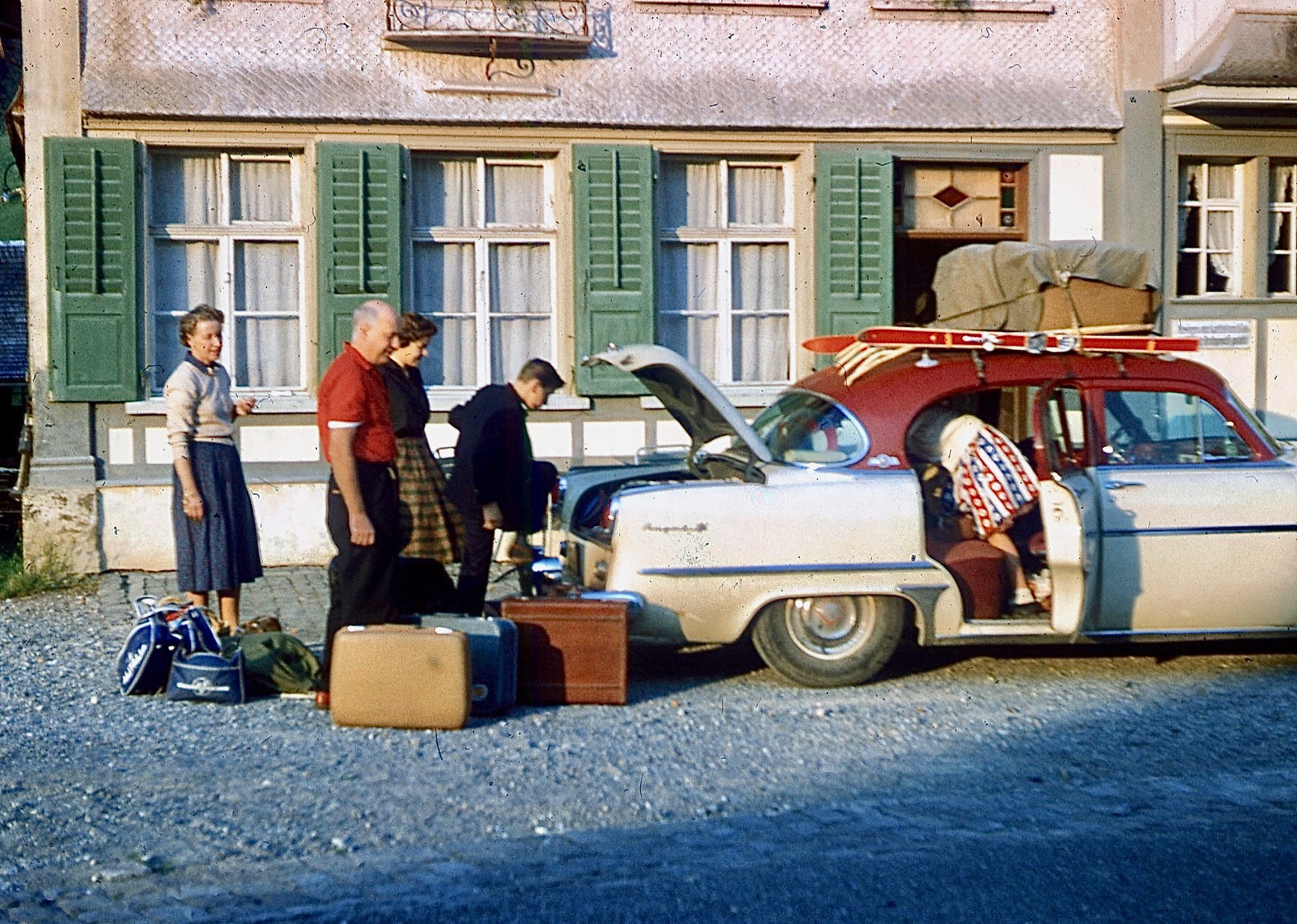
It seemed very strange to us kids that we could not wear shorts in Spain. We had to wear skirts all the time. When we went to church we had to not only keep our heads covered but our shoulders too. I remember one time in church, a woman came up to my sister Charlotte who was wearing a sleeveless, neckless dress and covered her shoulders and neck with a mantilla.
We drove up through Spain and spent more time than expected in a small town called Toledo. My mother had found a hotel there with a swimming pool and we all loved it so much that we decided to stay for a week or more.
There had been a big battle in Toledo during the Spanish Civil War. This was the first time I really heard about the communists and how bad they were ( at least that is how the story was told to me). Also I remember seeing ‘the wall of the sun” and being told how old it was. I had no idea that anything could be that old.
I think my sisters and I all had boyfriends there at the hotel which was out in the country away from the city. I remember watching women who worked in the kitchen catching chickens in the back yard, killing them and plucking the feathers. It was very sad to leave Toledo.
We went on to meet Ruth Slattery in Madrid. She was a friend of my mother’s but I don’t know how. Maybe through her other friend Marge McClain who was my mother’s best friend. Ruth was a Catholic and had a lot of money. We were probably together for some days in Spain. On the day that she left, after she had already said goodbye to us, I went into the bathroom of our hotel and noticed that she had left her ring by the sink. I grabbed it and ran down to the doorman who got me a cab to the airport. There, I was able to find Ruth before she got on her plane, she was on the runway walking to her plane as I remember. It must have been a small airport. It was 1958.
She was delighted to have her ring back and thought it was very smart of me to deliver it to her. Some time later she sent me a gold bracelet with a St. Christopher Medal on it. It was very special and I was very proud. As time went on, my mother added to the bracelet on my birthday and graduation with medals of other saints…..when I graduated from high school, my sister Katie gave me a Buddha for my bracelet. I thought that was really cool.
From Spain, we drove on through France and to Rome. Sometimes, friends would meet us along the way and travel with us. Mostly though, it was just my mother and us. My sisters were not too happy to be in Europe with my mother. They were 13 and 14 years old and would have much rather been at home with their friends. Terrible fighting went on between my sister Katie and my mother and between us kids I am sure. I remember one time, staying at a hotel in France, I think someone threw something at somebody. Anyway there was a terrible fight. When it all calmed down, my mother came into the room where we three girls were sleeping and said something like, “you know I am your mother, I will always be here to take care of you. That is my job. But you can leave any time you want.” It was a real martyr speech and I felt really sorry for her having to deal with us kids. I think my sisters must have used the word “m”artyr to describe my mother’s attitude.
Of course, she was a martyr, I thought, what else could she do? But thinking about it now, she could have loved us and realized that it was just a teen-age phase that we were going through.
My mother’s rationale for taking us to Europe at this time was that soon it would be too late to take us. As we got older it would be harder to take us out of school. As we all got to be teen-agers, none of us would want to go. As it was, Charlotte and Katie really didn’t want to go. Freddie and I happily tagged along.
In Rome, my mother had found a pension for us to stay at that was run by the nuns where Charlotte and Katie went to school in Manhattan. At first, there was a little bit of a struggle because they did not allow men to stay at this pension. It was only for girls from the countryside who came into the city to work or go to school. Somehow it was worked out that our family would occupy the whole top floor of the building. That way Freddie would be kept for the other occupants. It was an ideal situation. All our meals were prepared and we could come and go as we liked. There was a beautiful enclosed garden courtyard in the front. Mass was said everyday there, which made it very easy for my mother to get to church, which she loved to do.
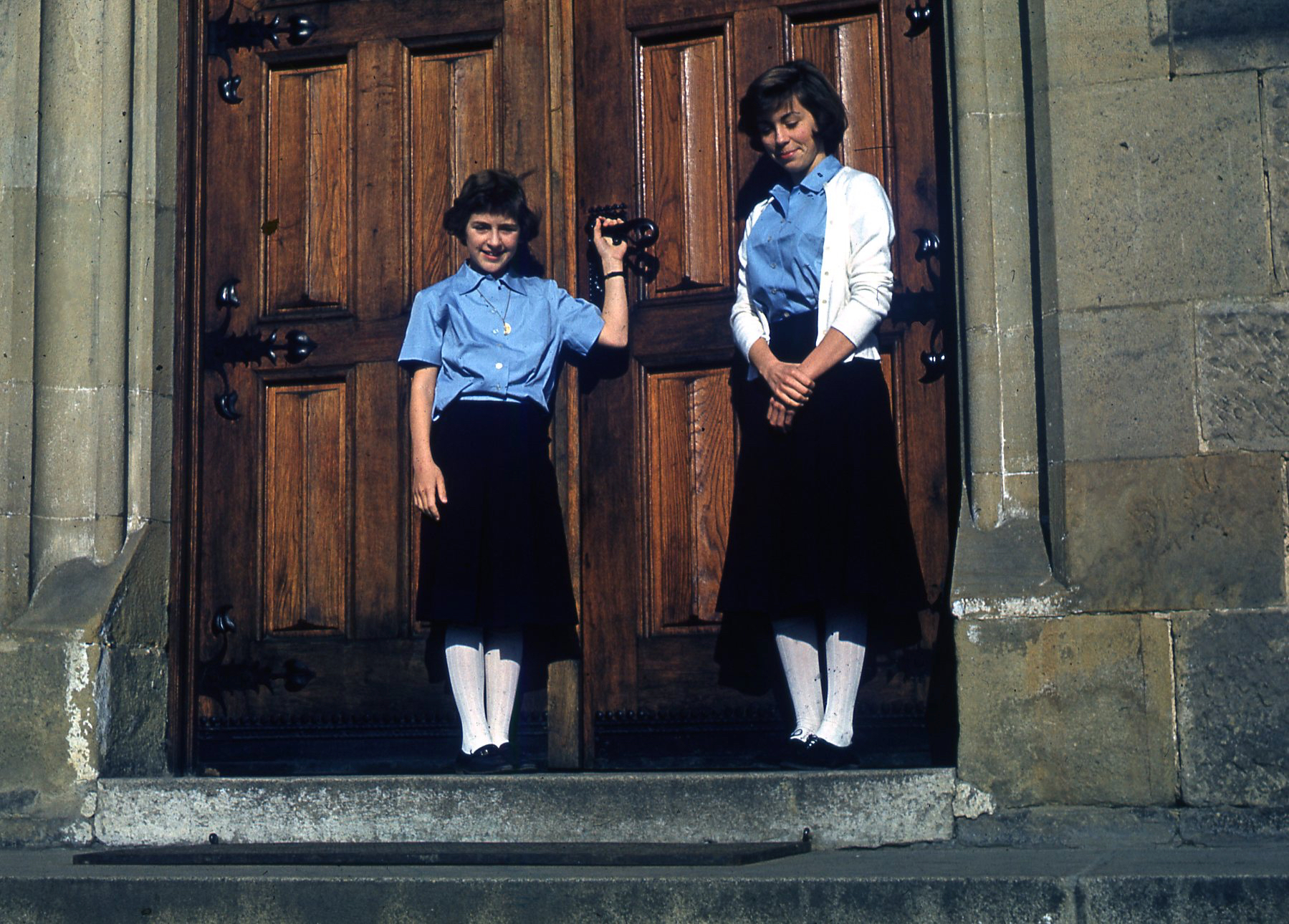
We arrived in the fall and were signed up for school at the American School in Rome. We also had Italian classes from a tutor at the pension. My mother also found a seamstress who made coats for all of us.

My mother got sick soon after we arrived. I remember around the time of her birthday, which was September 14, she was not feeling good. She just needed to rest, though. Her face was constantly bothering her. She turned 41 that year but I distinctly remember celebrating her 40th birthday. We kids made a cake for her out of a shoe box and decorated it with flowers made out of tissues.

I think my mother must have really enjoyed it once she started to feel better. She had her days to herself while we were in school. I am sure she went to museums and churches and shopping. While we were there, Pope Pius the 12th died. This was a very big deal. We didn’t live far away from St. Peter’s, and I think that we were there when the white smoke came up signaling the selection of a new Pope. I know it was all very exciting.
Interpretation Two
1952
| Before Christmas | Went to the school play at Our Land Queen of Martyrs and my mother left me alone while she went to get my siblings. I remember going after her and getting caught in the crowd on the steps, I was really scared and I think I might have vomited. My mother wrote to her parents that when she returned with my siblings, I was on stage with Monsignor McLaughlin being as good as gold. |
| December 28, Saturday | Went to a party with entertainment with my siblings. I volunteered to be part of the magician’s act. My mother wrote about this in a letter to her parents but I sort of remember it. |
1956
| July 10 | Gretchen is the flower girl at Dick and Anita’s wedding. My mother made the dress. |
1958
| early | Perry Como had a big hit with a song by Burt Bachrach—Magic Moments…..I loved to sing and I remember clearly one afternoon after school—I was 10—sitting on the sofa in the living room with my mother. She was tired and resting and I was sitting next to her with my head on her shoulder and I sang this song to her “we have these moments to remember”—I was so happy to be sitting with my mother and having her all to myself…and I loved to sing! (writing this May 30, 2013). This is such a lovely memory. I remember my mother and Mrs. Connors laughing at me for being so romantic. I didn’t care. I didn’t understand why they were laughing, I was just so happy. |
| summer | We sailed for Europe on a freighter. My mother and her four children, Charlotte and Katie really didn’t want to go and gave my mom a terrible time…but my mother insisted. I had a boyfriend, Robert Gearheart. He had a going away party for me in his basement on Austin Street. I must have known him from dancing class at the Community House. It was a boy-girl party. I remember distinctly their paneled basement. I don’t think I had ever seen a paneled basement before. On the walls were large posters from cities all over Europe which I thought they had purchased just for me and the party. However, in thinking about it now, they probably always had those posters. It was really nice of his parents to have that party. He was my first Jewish boyfriend and I think we probably kissed but not seriously, although I did take the romance very seriously. I was very sad to be going to Europe. |

1960
| summer | Our first summer home in Forest Hills after going to Europe. |
| We go to California this summer and Katie and my grandparents have a huge fight and Katie is sent back home early. She stays with Aunt Helen and Uncle Fred….and then after we return, she continues living with them. | |
| The campaign for president of the US is under way that summer and this must be when I remember watching the convention on TV at my grandparents’ home. They were all Republicans. I remember being taught that Kennedy was really bad and that Nixon was good….but my mother was Catholic so what did she say to me about that?….I just can’t remember…so much going on at that time. |

1961
| January | Kennedy inaugurated |
| At this time, it was discovered by the nuns at OLQM that a hand signal (the finger) which our group had been giving out meant “fuck you”. One by one we were called to the convent and given a long lecture by the nuns and asked to go to confession. Mary Ellen Milazzo, Margo Fee and I were the ones in trouble. Ann Nobiletti did not go to OLQM so she was safe. I can’t remember if our parents were called…but we were all quite upset and confessed our sins. I was dating Gregory, Mary Ellen and Michael and Chris Rosas was dating Kevin Gardner….it was all very traumatic with lots of tears…the nuns told us that we were causing our boyfriends to sin by making that sign. There was a party that night, the night of the day that the nuns called us one by one to convert. We still went to the party but we were all very upset and as I remember I refused to make out with our boyfriends…. | |
| June | Graduated from 8th grade. |
| September | Started high school at Notre Dame in Manhattan. |

1962
| Summer | Mom had surgery for uterine cancer. Ralph came to visit while she recouperated. I remember distinctly sitting on the wall in our front yard and Uncle Ralph and my mother were going for a walk. Uncle Ralph asked me if I needed anything. I said I would love a Peter Paul Mounds candy bar. This was my favorite—chocolate coated coconut. He brought me a whole box of these bars—-must have been 24 bars—I was stunned and very happy. I had no idea my mother was so sick. I was so wrapped up in being 14, finished with my freshman year of high school, and very into my friends. He must have known how sick she was. I wonder what my mother and her brother discussed on that walk. Fred went to boarding school. |
| November | Cuban missile crisis. I was sort of dating at the time Roy Bookbinder. We had met at the home of a friend of Margo Fee’s boyfriend, who lived in Jamaica. Margo’s boyfriend was Billy Robbins and his friend was Guy. Margo and I used to go to this house a lot to hang out. Roy was a Jewish boy from Jamaica, Queens who was in the Navy. We had kissed a few times. He was stationed on the USS Independence, a big ship that was sailing around Cuba at the time. The relationship didn’t last long and soon I was involved with Cookie (Thomas) Cooper who was my boyfriend for a long time. Cookie was also from Jamaica and part of this group of friends. He was four years older than me and a construction worker who was working on the World’s Fair. |
1963
| summer | I remember going to a dance at the West Side Tennis Club. My mother made my dress. It was a white dress with a very full skirt. Around the center of the skirt near the bottom was black embroidery with eyelet cutouts…it was really great. My mother even made the belt which got very dirty very fast because it was white. I remember making out with my boyfriend…was it Reesie, aka “Maurice”…I don’t think so…..but I remember kissing someone in that dress. |
| November | My mother was in California when Kennedy was shot….she was on her way home when my grandfather died and she went back…years later I learned that my grandfather had committed suicide. I remember my mother calling us on the phone, we were all gathered around the TV watching the Kennedy news, and my mother was comforting us over her father’s death….but we weren’t upset about that. She said that we should all sit quietly together in the same room, that it would made us feel better…but that was far from mind…..we were really interested in watching the TV and of course being with our friends while our mother was away. |
1964
| February 29 | |
| Charlotte Gretsch Pretat wrote in an email, June 21, 2010 to GES “I know mom confided in Aunt Francis. After mom died she came to the house and coordinated what mom would wear in the casket and took care of some other stuff which made me feel that they had been rather close. Unless, of course, it just meant that Aunt Francis was real pushy.” | |
| July | The Milazzo family invited me to go to Piseco New York with them to their summer home in the mountains. It was so sweet of them and just what I needed. I had a great time. It was on a Lake and we did lots of swimming. They were so nice to me. |
| August | The Beatles play at the stadium at the West Side Tennis club. I kinda remember going and not being able to hear one word. |

Interpretation Three
1953
March 10
Moved to Shorthill Road.
March 16
Baby Helen (Happy) born to Fred and Helen Gretsch.
June-July
Mom takes trip to Panama. Grossma and Grosspa take care of kids
It is also interesting to note that my mother often took us ice skating in the 1950’s at the New York City building in Flushing Meadows. I remember we would always go to a near by Howard Johnson’s for ice cream after ice skating.
In 2005, I learned more about the history of the New York City Building in Flushing Meadows and its connection to the U.N.”….. the New York City Building (was) one of the few structures left over from the 1939 World’s Fair. Shortly before the war, the building had been divided in half; one side became an ice rink, the other a roller rink. There were ice shows and big band performances. In 1946, the skating surfaces were covered up and the spaces were converted into the seat of world government. The U.N. stayed for five years. It’s Flushing sessions were productive and star studded: Eleanor Roosevelt, Andrey Gromyko, Adlai Stevenson. The creation of UNICEF, the birth of Israel, the debate of Korea. It happened in a rink in Queens.” Nick Paumgarten, New Yorker, Department of Yesteryear, May 23, 2005.
1954
May
Gretchen’s first Holy Communion.
1955
Some time during this period, Maxine was in California visiting her parents with her children.

Friends of Maxine’s, Astrid Olin and her husband, had recently moved from Kew Gardens to Los Angeles where Astrid’s husband worked as a cartoonist for Walt Disney. Maxine and her children were invited to the Disney studios where they were taken on a royal behind the scenes tour in the process of which we all met Fess Parker. Fess Parker personally signed an 8 x10 photograph for each of the children.
1956
Mother Travels to Canada to visit Catholic Shrines (Via boat)
Rents house in Elka Park
1957
Summer Freddy attends Notre Dame Camp in New Hampshire. Freddie plays the bugle in the morning.
The family spent some time in Elka Park.
This 1957 Christmas picture on Shorthilll Road was taken the Christmas before we left for Europe in the summer of 1958. At the time, I ( Gretchen ) was really into the television show, Rin Tin Tin. NB, I was wearing the uniform of a cavalry soldier in the wild west. I must have gotten the outfit as a Christmas present. You can see that even though I was wearing an cavalry uniform and carrying a rifle, on my feet were still the patent leather dress shoes which I had worn to church that Christmas morning in my appropriate Christmas dress.

1958
This year is the 75th Anniversary of the Fred Gretsch Manufacturing Company.
I remember that little lapel pins with the number “75” in small shinny diamonds (probably actually glass) were distributed as mementos. I was very proud to wear one.
In early 1958 or late 1957, Sylvia won a raffle prize of one oil painting.
She decided to have an oil painting done of each of her children.
I remember my mother saying that long after we were all grown and moved away, she would have the portraits of us to look at.
The woman who did the paintings was Helene Yaron. I seem to remember that she was Russian.
September 14 Sylvia and her four children are in Rome. They are living on the top floor of a pension run by the Society of St. Ursula. This Catholic order of nuns run the high School in New York City which Charlotte and Katie attend. My mother first found out about this school on West 79th Street from Helen Mooney Gretsch’s sister, whose daughters also attended this school.
It is my mother’s 41st birthday. It is also very close to the 10 year anniversary of the death of her husband on September 10th.
Almost, 50 years later, my brother remembers that our mother suffered terrible migraine headaches during the time of her birthday. After he mentions it to me in an email, I remember too how sick our mother was when we finally got settled in Rome.
1960
Summer
Maxine and children go to California to spend the summer with Maxine’s parents.
Maxine and the children were just there the summer before in 1959.
If the family had stayed in New York, it would have been the children’s first summer home with their friends in two years. It must have been hard on all the kids to leave their friends behind again and head for California.
While in California, Katie has a falling out with her grandparents and is sent back to New York before the rest of the family. The plan is that Katie will stay with Helen and Fred in Manhasset until the family returns.
August plans change when the family returns and it is decided that Katie will live with Helen and Fred for a while.
June 3 Charlotte graduates from Notre Dame
Sept. 14 Maxine’s 44th birthday. she has lunch with Eleanor O’Brien in New York City and writes to her parents “don’t know if she knows it’s my birthday.”
Thanksgiving ’61 Charlotte home from College. Maxine and Charlotte go out and buy dress for cotillion. “Then we took the dress to the hospital and Charlotte put it on for Marge who approved”.
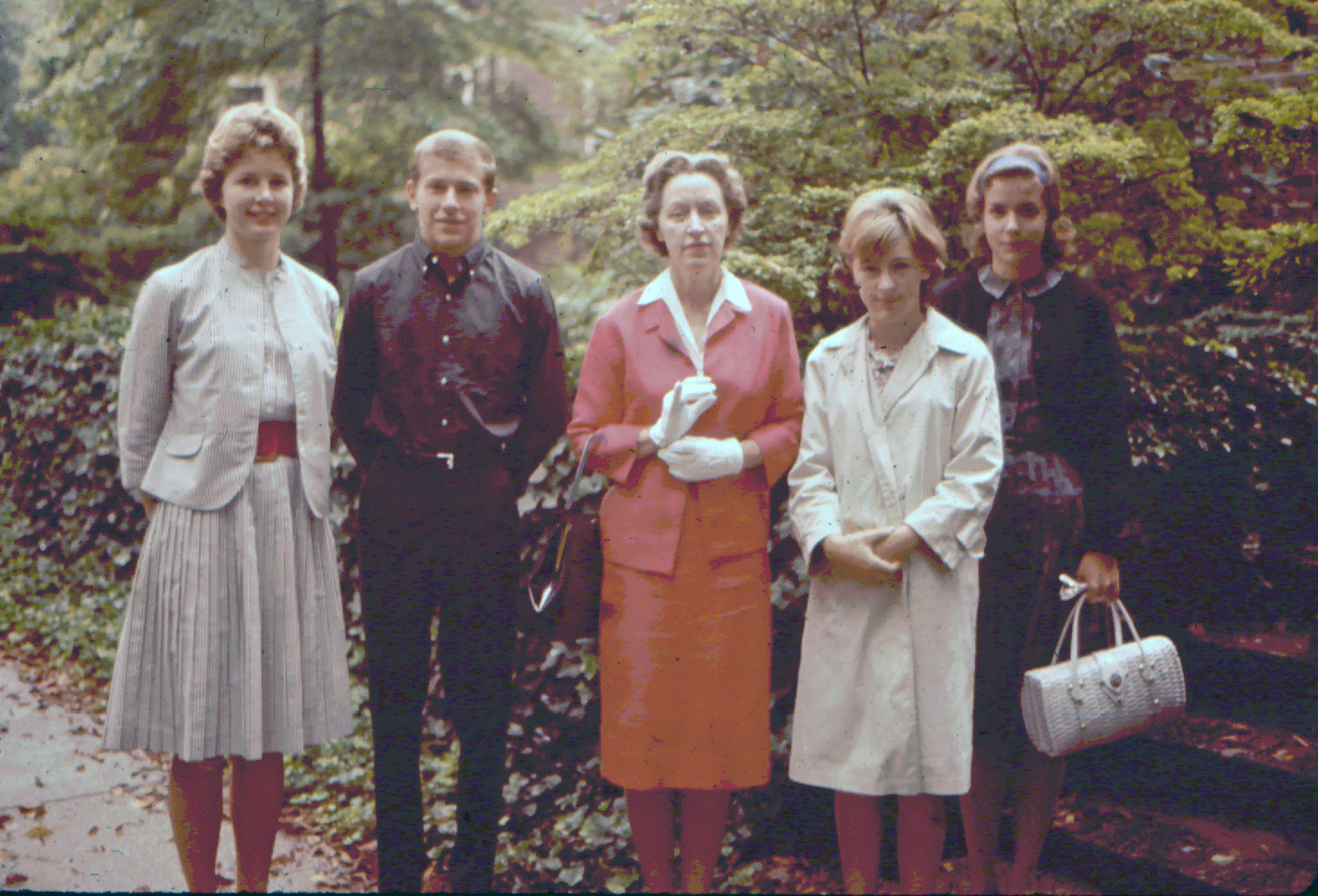
December 18 ” Marge is failing. ..still very slowly. One of her sisters plans to go home for Christmas, but the other will stay here. It’s a sad , sad thing.”
Christmas Charlotte’s Cotillion
1962
January
This essay recalls the time of my 14th birthday with my mother and moves forward to a birthday time with Ben Cohen when he was a young man 1997.
First written in June, 1997, revised September, 17, 1998 and revised again October 10, 2012.
Here in October of 2012. I am not quite sure why I placed this essay about Ben here in my mother’s 1962 time line. However, I like the connectedness of the complicated acts of birthday present giving….and I like the perspective of 14 year old me, juxtaposed to 49 year old me and now a 64 year old me.
“The Birthday present.”
June 2, 1997
Whitesburg, Ky.
Ben and I have for a long time been working out a lot of things together. David has been in the middle. Ben and I have come a long way in our relationship in many ways and at the same time we are again at the place where we were a long time ago. For both of us I think there is a comfort this time around in having time and space to work out our differences. At first the parameters were not so clear.
We both love David and that is at the heart of it all—our both wanting David to be happy. Let me begin to try and tell the story.
The roots of my birthday present story go back very far to when I was about 14 in the early 1960’s. Lumumba had been killed. Hammerskjold (Sept 1961) had been killed. Kennedy hadn’t been killed yet. My mother was still alive. There was a lot of consternation in the UN about the Congo and what would happen there. But I didn’t know anything about any of that. It wasn’t until much later that I learned about my mother and Hammerskjold, about the Congo and Lumumba and the UN.
It was January in New York City and very cold. The after-Christmas sales had been raging for a while and were pulling to a halt. It was very near my birthday.
I needed a new winter coat and my mother and I had been out shopping for one. We found what I thought was the perfect one, a blue loden coat which was very fashionable for teenagers at the time. But my mother refused to let me wear it until my exact birthday. This made me incredibly angry. I felt my mother was being silly and I was loosing out on the chance to show off my new coat.
But my mother remained adamant (like Hammerskjold) and it wasn’t until my birthday that I found out why. She had come across a coat in one of her own shopping expeditions which she felt that I might like better and she wanted me to have a choice. It was red and I didn’t in the end like it better. On my birthday I was presented with two coats early in the morning but I went to school wearing the blue coat which I had insisted I wanted to wear all long. The red coat was returned to the store.
This little event had far reaching effect. Every year at birthdays I am in a quandary about whether or not presents should be opened early. When I had children it became more problematic. I usually settled it by insisting that my children wait until the appointed day of celebration to open presents. I, in the privacy and rebelliousness of my single adulthood, would sometimes open one of my own presents early.
This somehow brings us to Kentucky. Walking the land that David’s grandfather and Ben’s great grandfather had taken ownership of in the early 1920’s. The next day as we were leaving I told Ben that I would really like to go to the daily newspaper in Norton and look through back issues for the facts about the Cohens in the area. He said he was afraid of what would turn up. No-one knows exactly why Jacob Cohen purchased this land. It is recorded that several members of the family which deeded it to him had to sign the deed. This assumes that it was an agreement of the whole family to give the land up. It also points to the aloneness of Jacob Cohen in the area. Here on this piece of paper the names of brothers and sisters and wives and husbands of the seller’s family are alluded to and signed. Jacob Cohen however stands alone. He has no brothers or sisters mentioned. His wife isn’t even mentioned or his children. This can all be explained in a legal sense but in another sense it is a true reminder of Jacob Cohen being alone here.
It’s David’s birthday and we have all come form various points to celebrate it in Kentucky. Rich came via Chicago from Kansas City and Ben and Gabriella came form Ohio on their long zig zag across the US. Six weeks ago I had purchased a present for David through a catalogue. I had asked him about it at the time to be sure it was a gift he would enjoy using. It was a simple, beautiful Japanese cutting tool that he could use in the garden. When the long triangular box arrived, David was the first to see it but I took it and put it away for his birthday. I don’t know if David knew what it was it. He didn’t mention it at all. I thought a few times, “should I give it to him he might be able to use it before his birthday?” but I always decided to wait.There was to be a birthday celebration and it needed presents. The box was packed into the truck when we came to Kentucky.
Now the problem here is when to give you the background information on my relationship with Ben which is far more complicated than my relationship with the giving and receiving of Birthday presents.
September 17, 1998
so much time later…I find this essay. . .I can’t even remember writing this or what the point of it was as I find it now in my computer but I wonder if this is the time in KY when Ben got so mad because I had brought up the thought of doing something nice for Jenny when she finished her Ph.D.
Maybe that show of Ben’s anger was background for telling the above story. David opened my present and loved it. Ben said it wasn’t for gardening and forest work but for carpentry. This was incorrect and David and I have used the tool many times in KY.
……and when David went to visit Ben and Gabriella at their new home in New Orleans in July, he came home with pictures of Ben wearing the t-shirt which I gave him from Florence. Actually Maggie gave it to him but it was stolen in South Africa and I gave him the one just like it that I had. It was cute to see him wearing it in the pictures.
Maybe the point of this essay, reread and reworked in 2012, is that if people live long enough, they can work out all of their differences.
Ben is now in 2012 helping David pass that same property in Kentucky into new hands. Ben’s expertise as a lawyer and his help with this complicated transaction is quite a gift to David and to me.
April 1962
Taken from letter written to parents from Sylvia
Oh, yes…..another time consuming factor…I bought the house last week. And some time this week I have to sit down and study the insurance, etc. And taxes are due, along with income tax, etc., so I’m up to ears.
May 2
Aunt Kate in a letter to Hattie and Max writes, “Also glad that you had news from Maxine that her broken ribs were ‘knitting nicely’. do hope no shock or other injuries develop, she certainly was lucky and fortunate to have Fred and Mrs. Conners.”
Friends
On October3, 2001, John DeBevic, the husband of my mother’s college roommate, Mary Lois sent me a letter. ”Sylvia was a sweetheart. Gentle and level-headed she had a beautiful disposition. One evening when I came to N.Y. and visited her we left to take in a variety of night clubs, which was her choice as I asked her to select where she would like to go. We did the town royally and it was only afterwards when I got back to Chicago that i learned that she had cancer and was terminal. Sylvia never gave me a sign of her distressing illness. That was a class act. she didn’t want to sadden me and instead wanted us both to enjoy a special evening.Months later, she asked Mary Lois to be with her as she was nearing death, and of course ML went.”
I had always thought my mother told no one she was so sick…..but apparently she told her college friend, Mary Lois. When I first read this letter in 2001, I didn’t follow up with John DeBevic and ask more questions. Mary Lois had died some years before. Now, in 2020,
when I rediscover this letter…I was so surprised to read that my mother had asked Mary Lois to be with her. In 2020, I almost did not reread the letter before i discarded it. I thought that I know everything that it said. So glad I reread it …….now can reimagine my mother’s death in the light of Mary Lois’ being with her.
It must have been early June that the cancer was found. They operated immediately. Perhaps, the cancer was found because of some tests they were doing around her car accident.
The cancer must have been very advanced when it was first discovered. It was only 18 months later, In February of 1963 that she passed away.
Maxine and Gretchen (me) are living at Shorthill Road alone this fall. Charlotte is at College, Katie is living with Fred and Helen on Long Island and Fred is at boarding school.
Most likely, this is the time that Maxine was having isotope therapy for her cancer. Her major surgery was over and she had recovered well.
I can barely remember the mood in that big house which was now so empty. My mother must have been very cognizant of the extent of her cancer and the nearness of her death. I was 14, a sophomore in high school, full of thoughts of my friends, oblivious to what my mother was going through.
My mother was in graduate school.
We also had a dog. Rupert. I think my mother was closest to this dog. She was used to having dogs and always had pets as a child. Rupert was named after St. Rupert, the patron saint of dogs, at lease that is what my mother told us. Rupert was probably about 4 years old at this time. He was a mixed breed, very cute.
At this time, Barbara and Joe Shea and two or three of their small children came to stay at Shorthill Road. They had just moved from Chicago and were looking for a house.
Sylvia went to Florida to recuperate with Helen Welsh while the Shea’s kept an eye on things on Shorthill Road..
1963
December 26 Katherine Gretsch made her debut at the Regina Cotillion on Long Island. The whole family was there in formal attire.
1964
January 15
I, Gretchen, turn 16 on this day.
My mother went into the city on the train several days before hand to find a ring for me. It was a family tradition that on the 16th birthday of each girl, my mother gave her daughter a beautiful ring. My mother must have been sick and surely tired but she went anyway and picked out the perfect ring for me.
On the morning of my birthday, I came down to breakfast and found at my place, a hand written poem. The poem was composed and written by my mother on her light blue stationary. Fifty years later, I still have the poem.
The paper was folded in half –side ways—and propped up like a tent—-and the front portion facing me, read
Ode to Gretchen”
Sweet Sixteen” sounds sentimental,
Trite and some how plain passé.
But to me its monumental,
That you’ve reached this glorious day.
First, my dear, my precious baby,
Then an imp of childish glee—
Now a gentle, gracious lady—-
These three vignettes I see in thee.
I know what the future holds;
Pleasure, pain and dreams-come-true.
And as each precious year unfolds,
Love you’ll give and love you’ll hold
I am sure I read the poem and went off to school on that cold, early, dark January morning. I am sure I didn’t think about the poem much. Little did I know that soon my mother would die and this poem would be the only time she ever communicated with me about my life after her death.
That morning like each of my high school mornings, I would walk to the train down Greenway North, change trains three times and finally walk up W. 79th street to Notre Dame. I am sure I met my friends Mary Ellen Milazzo and Eloise O’Shea along the way to the first train at 71 and Continental Ave in Forest Hills.
I had no idea my mother was dying and would in three weeks be admitted to the hospital for the last time.
This poem was her only way of talking to me about the future.
Gretchen keeps as happy as a lark. Her grades went down a little this term— I think it is to much “Cookie” —that’s her current boy friend. But she is doing alright and certainly is enjoying life!
February 8
Maxine is admitted to Doctor’s hospital, located at 88th Street and East End Ave. It is very serious
I remember going to visit my mother at Doctor’s Hospital after my school day was over. I would take the bus across Central Park. Sometimes, my faithful boyfriend, Cookie, would pick me up in his car and drive me. Mostly, he picked me up at the hospital and drove me home.
Once, I remember being there and my mother was delirious. It was very sad. She had so much medication. I was 16 and there alone with her.
Later that night, she called me and apologized for being so out of it while I was there. The whole thing was very confusing to me. I really had no idea that she was dying. No one was talking to us children about what was going on.
Another time, I remember my mother asking for “champale” to drink. This was a sparkling non alcoholic drink. It was sort of glamorous in its resemblance to campaign. I asked the nurse if she could have it. It would have to be given in a special tube which ran up through her nose. The nurse was very agrevated and said some thing like ‘ it is not going to do any good, it is just going to run right out of her”. I was very surprised that my mother was being treated so harshly.
One day, when I got home from school, about two weeks before my mother died, my sister Katie had three black dresses for me to choose from. Katie had picked them out at the store for me and brought them home. This was the way I learned for sure that my mother was dying.
February 29
Maxine passes away at 7:45 on this Saturday morning. There is no family member with her.
July
The Milazzo family invited me to go to Piseco New York with them to their summer home in the mountains. It was so sweet of them and just what I needed. I had a great time. It was on a Lake and we did lots of swimming. They were so nice to me.
Gretchen goes to live with the Shea’s
Interpretation Four
I first realized that my mother was going to die soon when I came home from school one day and saw that my older sister, Katie, had gotten three dresses from the store for me to choose from. They were black and she said that I would be needing them soon.
Katie is only three years older than me but, as older sisters go, that is enough.
As I look at it now, more than 40 years later, it seems quite right that it would be Katie who would let me know the “hard” facts, and it would be Katie who would feel it most important that I had the “right attire” for the situation.
I had just turned 16 and I was a junior in high school. Of course, I knew my mother was very sick. I would often visit her in the hospital on my way home from school. She was in Doctor’s Hospital on the east side of the city. . .I could take a bus right through Central Park and afterwards my boyfriend would drive me home.
As a 16 year old, I didn’t think about my mother very much. She was sick but she would get better. No one talked to me about her dying. No one, that is, until Katie brought home the dresses for me to choose from.
It was a strange way—the purchase of a new dress—to learn such a monumental fact. I remember being very sad at the realization. I had probably known deep down inside me that my mother was dying. But it was buried very deep down inside me. Being at the height of my teen age powers, the thought of my mother leaving me was very far from my mind.
From the moment I first saw the dresses, I knew that things were going to change deeply. I remember crying one day in class, probably soon after the dress incident and getting up and leaving the room. I went to the bathroom and my good friend, Mary Ellen, followed me. I remember being nervous that she would get in trouble for leaving the class. She told me though that the teacher had said it was alright for her to come and take care of me.
I was very lucky. The high school I went to was great. It was a very small school, only 200 students. My mother had been the president of the PTA my freshman year. An amazing accomplishment, I think. because she was a widow with four children. The last thing I would think she would need was more responsibility.
But perhaps, this is another way my sister Katie was like my mother. Something I never realized until quite recently. Katie keeps herself very busy. No matter what is going on she is busy. She, unlike me, doesn’t like to have a quiet moment. My mother must have been like that but I never noticed that in her. I was too busy being a kid.
Recently, my oldest sister [Charlotte] reminded me that after our Mom died, the four of us teenagers, two of us still minors, had a meeting in which we made a pact that we could never let anyone separate us.
I don’t remember this meeting but I can certainly imagine it. It must have made us all feel like we were a family who would stick together and not leave each other behind, like both our father and our mother had done.
At the same time, I am sure, I doubted the efficacy of such a pact. As the youngest of my parent’s four children, I had been watching my older sibling for the past 16 years. I waited on the sidelines while they played out their roles with hardly a glance at me. Except, of course, when I was needed to fit into some prescribed role they affixed to me. Watching older sibling is a lot different from watching younger ones and I always watched closely, trying to figure out my options.
While this pact was being made, while my siblings were imagining that they were securing independence for all of us from any authority, I did very little talking. While they assembled the rules, I held quietly in my very sad 16 year old body the memory of a pain earlier than the recent death of my mother.
Not so long before this pact, before my mother became ill, both my sisters and my brother hosted parties when my mother was away at night. This is a typical thing for teenagers to do but I didn’t know that at the time. All I knew was that something was being torn apart in my mother’s absence, something that was very fragile, something that my mother was trying really hard to hold together as she raised us without my father. I realized, during these late night parties, how fragile our life together was and how easily torn it would be. As friends of my siblings whom I knew my mother disapproved of gathered in our house, I cried in my bedroom distraught and totally alone. I didn’t quite know why but I knew something was terribly wrong.
Now, after my mother had dead and no longer able to hold us together, a new plan was being made. I must have been skeptical.
Growing up, I had also seen my second sister, Katie in her pre-teenage years, fighting so horribly with my mother, defying her at every turn until, finally, when Katie was only 15, she was sent to live with my father’s brother and his wife. My brother also had been in trouble several times for possession of various illegal drivers licenses and illegal ownership of a motorcycle. He too had been sent away at one point to a boarding school.
When my mother became very ill, Katie returned to live with us, Freddie was living at home now and finishing his senior year in high school, Charlotte had left college and was teaching at a local grade school and I was a junior in high school. Immediately after my mother died we were left alone on Shorthill Road. It is amazing to me now that no one was there with us. No grandmother, no aunt, no family friend. No one to comfort us.
Of course, we were teenagers, we didn’t feel like we needed comforting. We didn’t know that we needed comforting. We had never been taught the “reason” of comforting. That must have made it easy for those around us who didn’t really want to comfort us anyway.
Neither my mother nor my father had sisters, so there were no aunts to care for us except for the wives of my four uncles. They were too busy in their own lives to stop for awhile and think about us. We weren’t an easy bunch to think about. And if we didn’t need seem to need comforting, it just made it easier for everyone else.
Now my siblings were making a new plan for what was to happen. I had good reason to be skeptical. Their record of providing a comfortable and safe atmosphere was not very high. However, as the youngest, I was voiceless and the thought of any kind of camaraderie after the death of both of my parents was enticing. Nevertheless, a pact between the four of us— who had such a sorrowful history of getting along—must have on some level also spelled trouble to me.
I imagine this meeting was held in the living room of the house on Shorthill Road. The same living room where my mother had waited up for me when I can home from my dates. I remember seeing her through the front window sitting in a high backed winged chair reading a book. It was the same living room where my mother had once held so many dinner parties. At those times, the room would be set up with little card tables where the overflow of guests from the dining room table would be seated. As an 8, 9, and 10 year old, I always thought it was so much fun to set up and use these little tables.
It was the same living room that my mother held sway over when she first married my Dad during World War II. My dad’s mother had died in 1928 and when my parent’s first married they came to live in the home where my father had lived since he was 13. My mother was now the “Mrs. Gretsch” of the household.
When my mother arrived as a young bride in 1943, there were two servants in the household, Katherine and Henry. Her father-in-law explained to my mother that the main thing for her to do around the house was to keep out of their way. “Oh yes I have another function,” she wrote to her parents, “I am the one they come in to say “ Mrs. Gretsch, dinner is ready.” It must have been something very special to both my father and his father to have a new Mrs. Gretsch in the household. I imagine the same room where we made our pact was the same room where dinner was announced twenty years earlier.
The brick house on Shorthill Road was built by my grandfather in 1918-19. Then, my grandmother Charlotte was the Mrs. Gretsch of the household. There was a servant then too. Marion Duffy was 15 years old and listed in the census from that time as a servant. My grandmother was always used to having servants.
Apparently, the family which then consisted of 3 boys, age 14, 13, and 11 lived next door at 41 Shorthill Road while their new house was being built. I can just imagine the boys being very interested in the construction as it progressed.
By the time of that 1920 census, the family was living at 37 Shorthill Road. My grandmother’s father and her brother, Jack, were living with them also. Jack lived with his sister and her family until he was married in 1925. The three young Gretsch boys must have really been interested in their young bachelor uncle. He apparently lived a very festive life. Girls were a scarcity in the house in my grandmother’s generation. The three generations of family which lived there in the 1920 only had one girl, my grandmother.
The new “Gretsch” home was a very formal house in the 1920s.Duke Kramer who worked for my father remembers visiting the home when my grandfather lived there in the 1940s. He attested to its formalness. Duke was used to the shenanigans of my father. He found the atmosphere in my grandfather’s house very different. By then, my grandfather’s sister Helen Welsh had come to live with my grandfather. She was recently divorced, and, as my mother later wrote to her parents, Helen’s role at dinner was to “ arrange the centerpiece and ring the buzzer” The very formal meals were served in the dining room by the cook.
But by 1953, the year my grandfather died, and it was decided that my widowed mother and her four children would move back into the house, times had changed. Once, I remember we had an exchange student from France living with us. Maybe she used the maid’s room and bath which was just off the kitchen down stairs. Mostly, I remember that that room was sort of a catch-all room and then a T.V. room. It was in that room that I watched Perry Mason and “Dragnet” with my mother.
I remember the buzzer too. It was found under the dining room table not far from the head of the table. I remember, as a kid playing under the table, we could make the buzzer sound in the kitchen by just tapping the bumpy spot under the rug. It must have seemed strange to my mother to hear her children playing with the buzzer. It obviously held memories for her of quite a different time. Is that what she was trying to hold together, something from this earlier time?
My cousin recently told me a dinner-time story in my father’s boyhood in this house. I imagine the story happened in this very dining room, the room with the buzzer. Since my father died soon after I was born, he never shared any stories with me. My cousin always assured me that her father, my father’s brother, “never” talked about the past. But one day, my 59th birthday in fact, out of the blue this story tumbled out of my cousin’s memory. It was so delicious to hear something about my father as a young boy sitting at the table I remembered so well with his siblings and his parents. The story went like this….my grandfather loved asparagus but in those days, it was only available three weeks out of the whole year. So everyday for three weeks, the family had asparagus for dinner. Now, my cousin told me, how the world has changed, I eat asparagus everyday. . .how envious Grandpa Gretsch would be.
My mother too, like my father’s brother, hardly ever talked to us about earlier times. We certainly didn’t know that she lived in this house before any of us were born. She did tell me once, though, about one time she stayed in the house before she was married. It must have been in May of 1942. My mother visited New York then and stayed at my grandfather’s house. There is a letter from my grandfather inviting her to come. He even specified in the letter that she could stay in “my sister’s suite. She will be gone for some time yet.”
One morning while staying there, my mother thought she was alone in the house. She thought my father and my grandfather were at work. She heard some noises in my grandfather’s room. The master bedroom had a large second story porch just off of it. It’s easy to imagine that someone might have climbed onto that porch and into my grandfather’s room. She was very worried. . .in a strange house in a strange city. She called the police, who came immediately. They burst into my grandfather’s room and found him working at his desk. My mother was very embarrassed.
It’s interesting that this is the only story my mother passed on to me about her history in the house I grew up in. The story tells a great deal about my mother’s uneasiness in that house. Perhaps, in this house, my mother always had a feeling that there was something expected of her, something she had to uphold and keep safe. Her uneasiness was always there even when she came to the house as its mistress twelve years later. The story of that May morning in 1942 also speaks to my mother’s early worry that something was wrong, something was being transgressed, and she was the only one responsible for fixing it. This worry ate away at all the confidence she brought to this house. It surfaced even when she held those dinner parties with the overflow of guests sitting at the beautifully arranged card table set up in the living room.
Is that the same dread that my fear was mirroring years later when I cried in my bedroom as my siblings partied down stairs. I was the only one who took my mother seriously, who felt her laws had to be obeyed. I had to do something but I was just a kid. . .I could do nothing.
The “suite” that my mother stayed in that spring was my bedroom in the early 1960s. The room where she heard the noise in my grandfather’s room was the same room that I panicked in while I listened to the party below. She called the police. I had no one to call. I cried and cried and cried. Of course, I didn’t know any of this then. I didn’t know there was a history in the house. I didn’t know my mother was upholding anything. I just cried.
I wish I know more about the house on Shorthill Road when my grandmother was there. She lived there from 1920 to her death in 1928. She had just turned 40 when she moved in. She had been married for 16 years. I know so little about her life. Her nephew, really her husband’s nephew Uncle Teddy, told me that once he had poison ivy as a child and my grandmother gave him a very soothing bath in the maid’s bath room. That, I thought, was very strange. That was the room where we always bathed our dog. I never remember anyone else ever using that bath tub. Now, all of a sudden, I had an image of my grandmother there, being really kind and soothing her young nephew. It was the first image I had of my grandmother in the house I grew up in. By then I was myself well into my 40s.
I told Uncle Teddy that I knew very little about my grandmother, that no one ever talked about her. He said that he didn’t know why she was never talked about. He said she was beautiful and very very kind. Everyone loved her. I still wonder why no one ever told me about her. Perhaps it was because I was born 20 years after she died. I lived in the same house she did, she was my grandmother. But still she was never mentioned in my childhood.
Maybe that is because I was raised by my mother who never knew my grandmother Charlotte, my father’s mother. The silence around her certainly follows a pattern of silence that dominated my childhood. There was no talk of my father who died when I was a baby, no talk of his mother, no talk of my parent’s courtship, their short marriage.
………..
So the pact was made. We would never let anyone separate us.
The first to leave was Charlotte. She became engaged soon after my mother died. Her wedding was planned for September. By mid-summer, it was decided that I would go and live with Barbara and Joe Shea. Fred and Katie were left alone on Shorthill Road. Then Freddie was married. And then Katie was alone in the house on Shorthill Road. She was the only one not to break the pact.
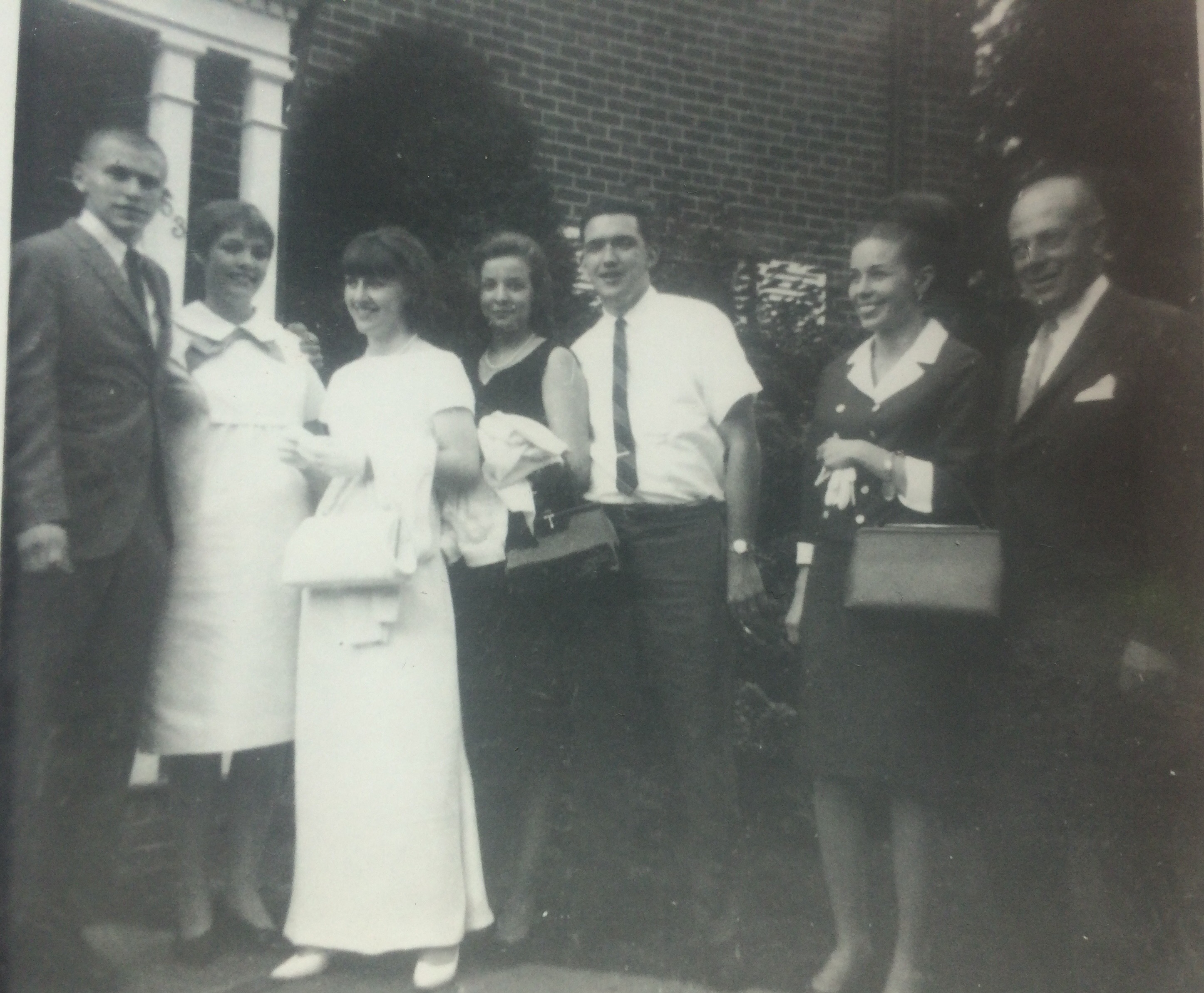
 Looking Oppositely